
Lab-tested peptides Free shipping over €350 Secure payments

⚠️ For research and laboratory use only. Not for human or animal use.

⚠️ For research and laboratory use only. Not for human or animal use.

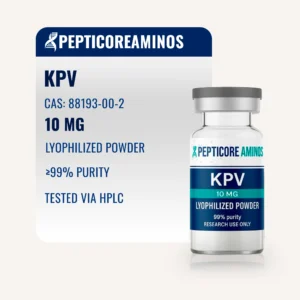
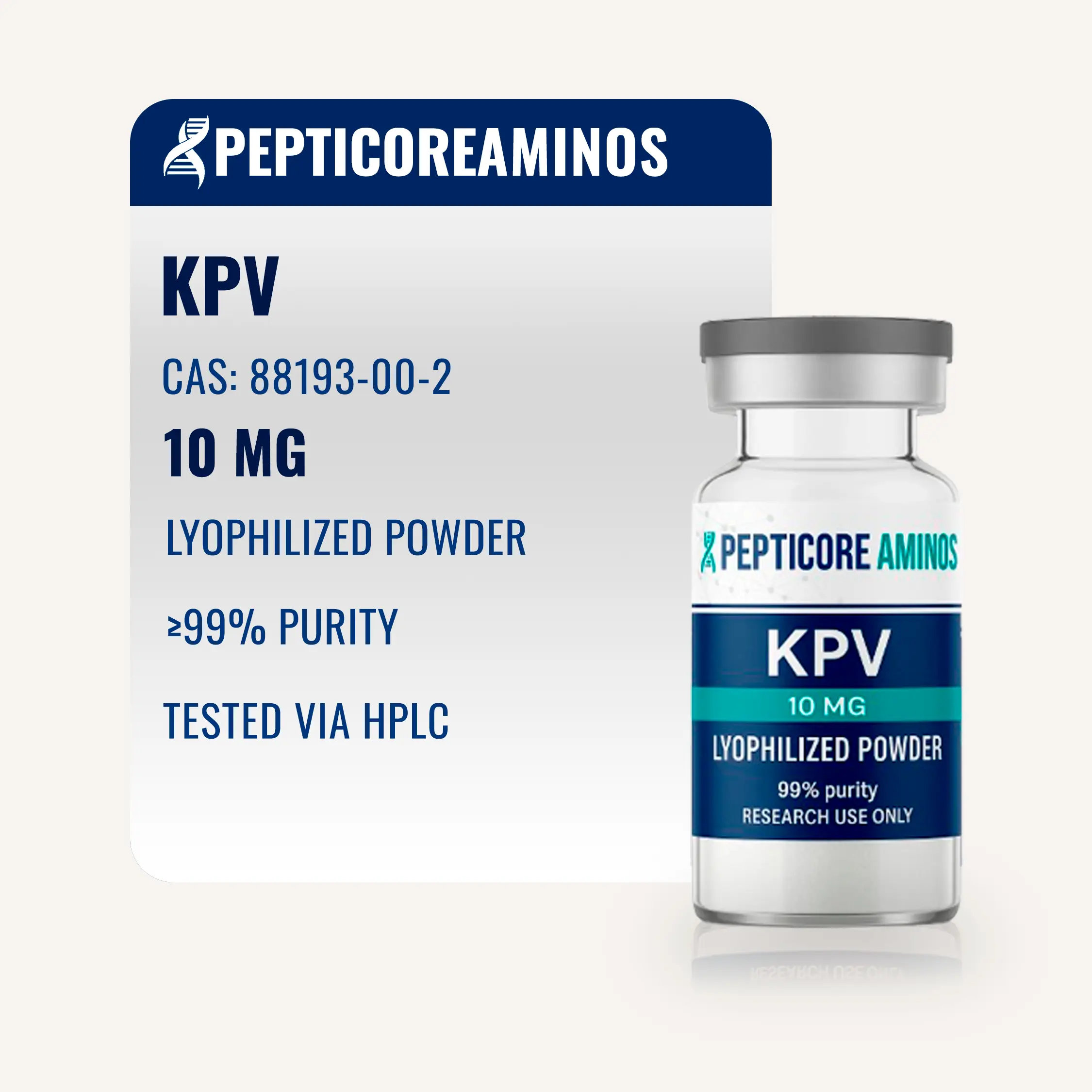
KPV

80,00 

KPV (Ac-KPV-NH₂) is a highly potent anti-inflammatory peptide studied for its role in supporting healing processes and modulating immune responses. Recent research highlights its effectiveness in models of intestinal inflammation and tissue restoration, where it helps reduce pain, swelling, and infection risk. Thanks to its regenerative properties, KPV represents a promising candidate for studies on wound healing, scar reduction, and skin regeneration.

Guarigione
Save with multipacks
Solvent not included. Add Bacteriostatic Water.
SKU: N/A Categories: , , Brand:
Laboratory analysis available (COA)Latest tested batch: PC-KP10-1012U — 10mg

Download latest COA
Pay With

strong>KPV (Ac-KPV-NH₂) is a tripeptide derived from the α-MSH (alpha-melanocyte-stimulating hormone) sequence, widely recognized for its remarkable anti-inflammatory, immunomodulatory, and regenerative properties. Preclinical studies have highlighted its potential in several research areas, particularly in tissue repair, intestinal inflammation, and scar reduction following injury or surgery.

Research and Intestinal Inflammation

One of the most promising aspects of the peptide Ac-KPV-NH₂ is its ability to reduce intestinal inflammation. In murine models of Inflammatory Bowel Disease (IBD), KPV administration significantly reduced inflammatory infiltration, myeloperoxidase (MPO) activity, and overall histological signs of intestinal damage (PubMed 28343991). Treated animals showed faster recovery and improved weight gain compared to placebo controls.

Further research explored the use of hyaluronic acid-functionalized nanoparticles to deliver the peptide directly to inflamed intestinal regions. This approach improved mucosal healing and selectively reduced TNF-α levels without affecting other tissues (PubMed 40073467). These findings suggest that KPV represents an innovative and safer method to modulate intestinal inflammation, potentially useful as a preventive or maintenance agent in chronic IBD research.

An interesting feature of KPV is its cellular transport mechanism. The peptide enters colonic cells through the PepT1 transporter, which is highly expressed only during inflammatory states. This explains why KPV acts primarily under inflammatory conditions, making it a promising candidate for chronic use with minimal side effects.

Systemic Anti-Inflammatory Activity

The anti-inflammatory properties of KPV have been known for decades. Experimental studies demonstrate that it acts as a potent anti-inflammatory and immunomodulatory agent, reducing key mediators such as TNF-α, NF-κB, and MAP kinases, while modulating immune responses in various tissues including joints, skin, mucosa, and the central nervous system (PubMed 18061177). This broad mechanism of action supports its potential as a systemic modulator of inflammation with a favorable safety profile.

Role in Wound Healing

Wound healing is a complex biological process divided into three main phases: inflammation, proliferation, and remodeling. Cells involved in these stages, such as fibroblasts, keratinocytes, and macrophages, express MC1R (melanocortin-1 receptor), which binds both α-MSH and its analogues, including KPV. This means that KPV can directly interact with skin cells to accelerate tissue repair and reduce local inflammation.

Unlike full-length α-MSH, KPV does not stimulate melanin production and therefore does not cause pigmentation changes. This makes it an excellent candidate for regenerative research in dermatology, aesthetics, and surgery. Moreover, studies show that KPV inhibits the growth of Staphylococcus aureus and Candida albicans at physiological concentrations, offering a unique combination of anti-inflammatory and antimicrobial activity.

Scar Formation and Tissue Remodeling

Recent research indicates that KPV may help reduce hypertrophic and keloid scar formation by modulating IL-8 secretion and collagen type I metabolism. During the remodeling phase, KPV helps normalize fibroblast activity and limit excessive extracellular matrix deposition.

Conclusion

Overall, KPV (Ac-KPV-NH₂) emerges as a peptide of high value for biomedical research, acting selectively on inflammatory pathways, promoting tissue regeneration, and offering a superior safety profile compared to other peptides in the same class. The combination of targeted anti-inflammatory action, antimicrobial properties, and collagen modulation makes KPV a promising candidate for ongoing studies in gastroenterology, dermatology, regenerative medicine, and wound healing.
mg

10mg

Peptide Technical Data

CAS Number 88193-00-2
Sequence Lys–Pro–Val
Molecular Formula C₁₇H₃₂N₆O₄
Molecular Weight ~384.48 g/mol
Purity ≥99%
Synthesis Method Solid-phase peptide synthesis
Form Lyophilized powder
Appearance White to off-white crystalline powder
Solubility Soluble in water or 1% acetic acid (~1–2 mg/mL typical)
Stability & Storage −20°C for up to 24 months; after reconstitution:
– 4°C for ≤4 weeks
−20°C for ≤6 months
Shipping Conditions Ambient temperature; refrigerate on arrival
Regulatory Status Research use only; manufactured in cGMP-compliant facility

Storage

Storage Instructions

All Pepticore Aminos products are manufactured using a lyophilization (freeze-drying) process, which ensures product stability during shipping for up to 3–4 months.

Once reconstituted (mixed with bacteriostatic water), the peptides should be stored in the refrigerator to maintain stability. After reconstitution, they remain stable for up to 30 days.

What is Lyophilization

Lyophilization is a dehydration process, also known as cryodesiccation, in which peptides are first frozen and then exposed to low pressure. Under these conditions, the water in the vial sublimates directly from solid to gas, leaving behind a stable, white crystalline structure (lyophilized peptide).

The white powder can be stored at room temperature until reconstitution with bacteriostatic water.

Storage After Delivery

Keep peptides cool and protected from light. For use within a few days, weeks, or months, simple refrigeration at a temperature of < 4 °C (39 °F) is sufficient.

Lyophilized peptides are generally stable at room temperature for several weeks or longer; if use is expected within a few weeks or months, this storage condition is acceptable.

Long-Term Storage

For periods of several months or years, storage in a −80 °C (−112 °F) freezer is recommended as the optimal solution to preserve peptide stability.

For more information on proper storage techniques, visit:
Peptide Storage Information

Disclaimer - For Research Use Only

The products offered by Pepticore Aminos are intended exclusively for research and laboratory use and are sold only to qualified professionals, institutions, or authorized entities. These products are not intended for human or veterinary consumption, nor for any application involving living organisms, including – but not limited to – diagnostic, therapeutic, or recreational purposes.

By making a purchase, the customer declares that:

  • they are a qualified professional or entity, possessing the necessary competence, training, and facilities for the safe handling of chemical reagents;
  • they will use the product in full compliance with all applicable local, national, and European Union laws and regulations;
  • they will adopt appropriate safety measures during all stages of handling, storage, and disposal.

Prohibited uses:

  • The product must not be used as an Active Pharmaceutical Ingredient (API) in the manufacturing or preparation of medicines intended for humans or animals;
  • Any direct administration or use on humans or animals is strictly prohibited;
  • Pepticore Aminos does not endorse or permit the use of its products for the production, testing, or development of illegal substances.

Regulatory compliance:

Pepticore Aminos does not claim or imply that its products are approved by the European Medicines Agency (EMA), the Food and Drug Administration (FDA), or any other regulatory authority. All information provided is for informational and scientific purposes only. These products are not intended to diagnose, treat, cure, or prevent any disease.

Liability:

L’acquirente si assume ogni responsabilità per la manipolazione, conservazione e utilizzo del prodotto in condizioni sicure e conformi alla legge.
Pepticore Aminos non potrà essere ritenuta responsabile per danni diretti o indiretti derivanti da un uso improprio, dallo stoccaggio non corretto o da un utilizzo non autorizzato del prodotto.
Pepticore Aminos si riserva il diritto di rifiutare la vendita a qualsiasi individuo o ente sospettato di uso improprio dei propri prodotti.

In case of doubts regarding the safe and lawful use of the product, it is recommended to consult a qualified professional experienced in laboratory research.

Shopping Cart
kpv 10mg peptide fiala italiaKPV
80,00 Select options