



BPC-157 + TB-500 (Thymosin Beta 4) + GHK-Cu – Extended Description and Research Applications
Blend BPC-157 + TB-500 + GHK-Cu is a peptide formulation designed for preclinical research on tissue regeneration, dermatology, and inflammation modulation. It integrates three peptides with complementary mechanisms: BPC-157 (a stable gastric pentadecapeptide with pro-angiogenic and pro-repair activity), TB-500 (a functional derivative of Thymosin Beta-4, 43 aa, a regulator of actin dynamics and inflammation), and GHK-Cu (a copper-binding tripeptide with pro-collagen and antioxidant properties). The goal is to exploit multifactorial synergies in angiogenesis, cell migration, ECM remodeling, and redox–cytokine balance to accelerate and improve the quality of reparative processes.
Biochemical Mechanisms of the Components
BPC-157. Derived from the Body Protective Compound, it has shown effects in animal models on the GI tract, liver, pancreas, tendons/ligaments, muscle, cornea, heart, CNS, and nerves. It acts prominently on nitric oxide (NO) signaling, counteracting the damaging effects of NO inhibition (e.g., L-NAME) and modulating eNOS through the upregulation of antioxidant enzymes (e.g., HO-1). Transcriptomic evidence indicates fine regulation of Egr, Nos (especially eNos), Srf, Vegr, Plcγ, and Kras, impacting adhesion, thrombosis, and inflammatory response. Rapid and widespread tissue distribution after administration supports a multi-organ activity profile. [1][2]
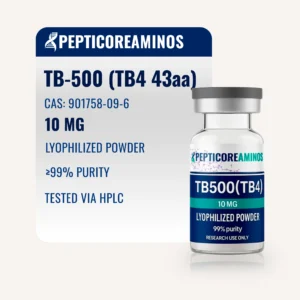
TB-500 (Thymosin Beta-4). An actin-sequestering peptide that regulates cell motility, growth, and division. Beyond its role in actin dynamics, it also “moonlights” as a transcriptional modulator of nitric oxide synthase pathways, angiogenesis, proliferation, and immuno-inflammation: it attenuates NF-κB and TLR, reduces cytokines such as TNF-α and IL-6, and activates PI3K/Akt/eNOS, Notch, and Ang1/Tie2; it modulates TGF-β (anti-fibrotic) and influences Wnt (neo-folliculogenesis). Reported benefits include myocardial, skeletal muscle, skin/cornea, and CNS regeneration. [3][6][7]
GHK-Cu. A natural complex (Gly-His-Lys + Cu2+) found in plasma, saliva, and urine, known in dermatology for promoting collagen synthesis, fibroblast proliferation, ECM remodeling, and dermal healing. It modulates metalloproteinases and antiproteases, suppresses pro-inflammatory cytokines (TNF-α, IL-6), enhances antioxidant systems (SOD, glutathione), and coordinates the deposition/degradation balance of proteins at the genetic level. ]
Functional Synergies of the Blend
Angiogenesis and Perfusion. TB-500 and BPC-157 converge on VEGF/vascularization, while GHK-Cu supports endothelial proliferation. The improvement of the microvascular network enhances nutrient and oxygen supply as well as waste removal, accelerating the inflammatory and proliferative phases of healing.
Cell Migration and ECM. TB-500 optimizes actin polymerization and motility; BPC-157 and GHK-Cu enhance fibroblast activity and collagen/ECM deposition, building a strong “scaffold” for neo-vascularization and re-epithelialization.
Immuno-modulation and Redox. The three peptides reduce oxidative stress and pro-inflammatory cytokines through distinct yet complementary pathways: BPC-157 realigns the NO/eNOS axis, TB-500 attenuates NF-κB/TLR signaling and upstream cytokines, and GHK-Cu buffers ROS and cooperates in inflammatory resolution. The diversity of targets potentially allows for lower doses while maintaining the overall effect.
Preclinical Applications: Musculoskeletal, Dermatological, and Post-Surgical
Muscle/Tendon. BPC-157 increases GH receptors in local fibroblasts, amplifying anabolic signaling at the site without systemic elevation; TB-500 accelerates ECM deposition and activates satellite cells for differentiation; GHK-Cu reduces oxidative load and excessive scarring, improving elasticity and the quality of newly formed tissue. In combination, these effects result in faster and more functionally consistent recovery trajectories.
Dermatology and Chronic Wounds. GHK-Cu is well established as an active agent for dermal repair, texture, and elasticity; co-administration with BPC-157 and TB-500 provides a favorable microenvironment for re-epithelialization, angiogenesis, and controlled remodeling, with potential experimental relevance in ulcers and hard-to-heal wounds.
Bioburden Control. TB-500 exhibits antimicrobial properties and enhances antibiotic penetration; GHK-Cu can generate lipid complexes in situ with antimicrobial activity, reducing bacterial and fungal colonization; BPC-157 increases perfusion and immune cell recruitment, contributing to an environment hostile to pathogens.
Anti-Aging Profiles and Tissue Resilience
Aging is accompanied by a decline in repair capacity, chronic inflammation, and redox dysfunction. TB-500 supports organ regeneration (heart, CNS, cornea, skin, muscle) by activating progenitor cells and protecting mature cells; BPC-157 mitigates ischemic damage and necrosis markers, preserving perfusion and integrity; GHK-Cu modulates broad genetic programs, suppresses NF-κB, supports DNA repair and proteasomal functions, reducing ROS and cytokines. Together, they outline a geroprotective profile focused on efficient repair, inflammation control, and tissue homeostasis.
Formats and Experimental Use
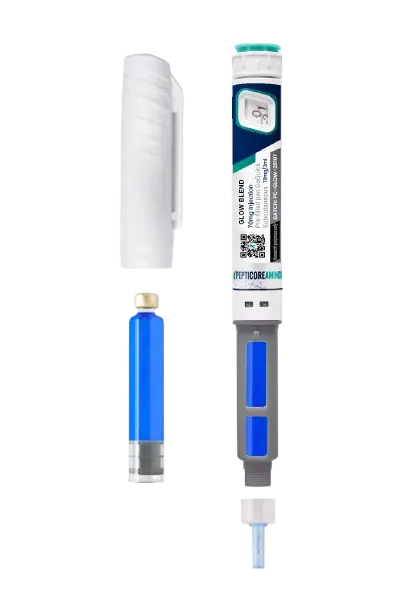
Available configuration: BPC-157 10 mg + TB-500 10 mg + GHK-Cu 50 mg (total 70 mg). This setup simplifies ordering, storage, titration, and co-administration, allowing researchers to focus on experimental design, histological/biomechanical outcomes, and gene expression analysis.
Research Warnings
Product intended exclusively for research use only. Not intended for the diagnosis, treatment, or prevention of diseases; not to be administered to humans or animals outside authorized settings. An ethical protocol, appropriate PPE, and suitable storage conditions are required; experimental controls, pre-specified endpoints, and bias mitigation strategies should be implemented.
References
[1] 10.3389/fphar.2022.1026182
[2] 10.3390/ph18020185
[3] 10.3389/fendo.2021.767785
[4] 10.1016/S0014-2999(97)01033-9
[5] 10.1196/annals.1415.004
[6] 10.2147/DDDT.S82030
[7] 10.3389/fmolb.2022.925700
[8] 10.18632/oncotarget.11168
[9] 10.1016/j.bmcl.2014.12.029
[10] 10.3390/biomedicines10112696