Lab-tested peptides Free EU shipping over €250 Secure payments via Stripe

BPC-157 + TB-500 Blend

74,90 

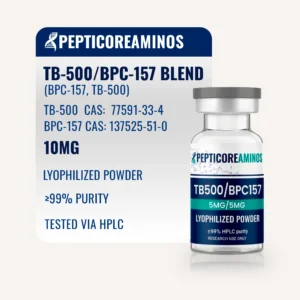
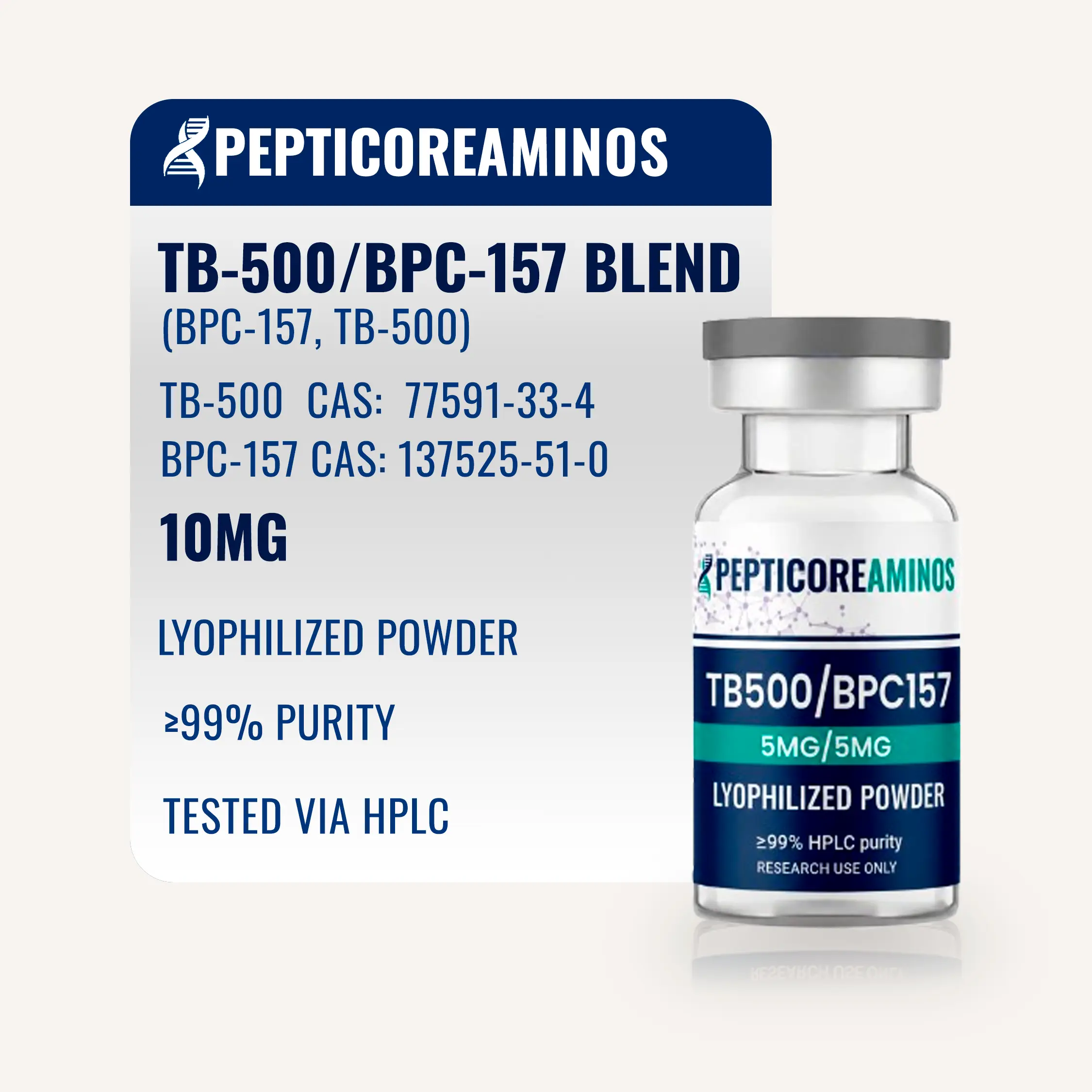
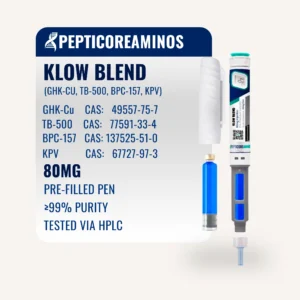
BPC-157 + TB-500 Blend combines two synthetic peptides studied in preclinical research for cellular processes related to tissue remodeling, angiogenesis, cytoprotection, and cytoskeletal dynamics.

BPC-157 is the subject of research for its role in fibroblast migration, collagen synthesis, microcirculation, and pathways associated with tissue repair. TB-500, on the other hand, is studied for actin dynamics, cellular migration, and extracellular matrix remodeling.

This blend is intended exclusively for laboratory and research applications. Not intended for human consumption, veterinary, diagnostic, therapeutic, or food use.

Availability: In stock

Solvent not included. Add Bacteriostatic Water.
Verified quality and secure purchase
  • Independent COA for every batch
  • Ships within 24h from EU stock — tracked
  • Secure payments — Stripe protected
  • 14-Day Money Back Guarantee
Each batch is verified with COA.
PREORDER · 10% OFFThis product is currently in the final stage of lyophilization and quality control. Orders containing this item are expected to ship within approx. 7 business days. The preorder discount is applied automatically at checkout. This offer cannot be combined with other discount codes.
Pay With

BPC-157 + TB-500 Blend

Peptide blend for research on tissue remodeling, angiogenesis, cytoprotection, and cellular dynamics.

What is BPC-157 + TB-500 Blend?

BPC-157 + TB-500 Blend is a combination of two synthetic peptides widely studied in preclinical research for their role in cellular response processes, tissue remodeling, angiogenesis, and regulation of the extracellular matrix.

The blend combines BPC-157, a pentadecapeptide composed of 15 amino acids, and TB-500, a 43-amino-acid synthetic peptide related to thymosin beta-4. The scientific interest in this combination stems from the possibility of observing, in controlled experimental models, complementary biological pathways involved in cellular migration, stress response, actin dynamics, and structural repair processes.

Role of BPC-157 in preclinical studies

BPC-157, also known as Body Protection Compound-157, is the subject of numerous studies in cellular and animal models for its cytoprotective and regenerative activity. Preclinical literature describes it as a peptide involved in maintaining tissue integrity, modulating microcirculation, and the biological response to different types of cellular stress.

One of the most studied areas concerns the stimulation of angiogenesis, meaning the formation of new blood vessels from existing ones. This process is analyzed in relation to VEGFR2 signaling, Akt/eNOS pathways, endothelial cell survival, and the regulation of repair mechanisms in connective tissues.

In several experimental models, BPC-157 has been associated with fibroblast migration, extracellular matrix deposition, collagen synthesis, and the modulation of molecular markers related to cytoprotection. For this reason, it is often used as a research compound in the study of tendons, ligaments, muscles, mucous membranes, skin tissue, and microcirculation.

Role of TB-500 in cellular studies

TB-500 is a synthetic peptide derived from a functional region of thymosin beta-4, a protein studied for its involvement in cytoskeletal biology. In experimental systems, TB-500 is used to investigate actin dynamics, endothelial cell behavior, cellular migration, and extracellular matrix remodeling processes.

Its scientific relevance is linked to the relationship between monomeric actin, actin filaments, and cytoskeletal organization. Since these elements regulate fundamental cellular processes such as adhesion, motility, membrane protrusion, endocytosis, and mechanotransduction, TB-500 represents a model of interest for studies focused on cellular response and structural remodeling.

Preclinical literature reports the use of thymosin beta-4-related peptides in neural, vascular, cutaneous, and cardiovascular models, with histological, biochemical, and molecular analyses aimed at evaluating stress markers, cytoskeletal organization, and tissue response.

Why Study the BPC-157 + TB-500 Blend?

The interest in the BPC-157 + TB-500 Blend derives from the combination of two distinct but complementary research profiles. BPC-157 is mainly studied for angiogenesis, cytoprotection, fibroblasts, collagen, and microcirculation regulation; TB-500, on the other hand, is analyzed for its role in actin dynamics, cellular migration, and cytoskeletal remodeling.

In an experimental context, this combination allows pathways related to tissue response, cellular communication, structural organization, and extracellular matrix modulation to be observed simultaneously. The blend is therefore of particular interest for studies on cellular and preclinical models in which parameters such as migration, adhesion, vascularization, oxidative stress, connective tissue remodeling, and histological organization are evaluated.

The use of the blend should not be interpreted as a therapeutic indication, but as a research tool for analyzing complex biological interactions in controlled experimental environments. The observed results always depend on the model used, the experimental design, the concentrations employed, exposure times, and the selected analytical parameters.

Applications in experimental studies

In laboratory settings, BPC-157 + TB-500 Blend is studied in relation to biological processes such as angiogenesis, extracellular matrix remodeling, cellular stress response, cytoskeletal organization, fibroblast migration, endothelial cell behavior, and the regulation of markers associated with tissue repair.

The combination is particularly relevant in experimental models dedicated to the study of connective tissues, vascular models, cutaneous systems, muscular paradigms, and preclinical analyses aimed at understanding mechanisms of cytoprotection and regeneration. In these areas, the blend allows evaluation of how different pathways may interact in the overall biological response.

Quality and intended use

BPC-157 + TB-500 Blend Pepticore is supplied in lyophilized form and is intended exclusively for research and laboratory applications. Each batch is accompanied by analytical documentation to support experimental studies requiring traceability, documented purity, and confirmation of molecular identity.

Research use only: product intended exclusively for laboratory and research use. Not intended for human consumption, veterinary, diagnostic, therapeutic, or food use. The information provided is for scientific and descriptive purposes only and does not constitute therapeutic guidance.
Disclaimer - Research Use Only

The products offered by Pepticore Aminos are intended exclusively for research and laboratory use and are sold only to qualified professionals, institutions, or authorized entities. These products are not intended for human or veterinary consumption, nor for any application involving living organisms, including – but not limited to – diagnostic, therapeutic, or recreational purposes.

By making a purchase, the customer declares that:

  • they are a qualified professional or entity, possessing the necessary competence, training, and facilities for the safe handling of chemical reagents;
  • they will use the product in full compliance with all applicable local, national, and European Union laws and regulations;
  • they will adopt appropriate safety measures during all stages of handling, storage, and disposal.

Prohibited uses:

  • The product must not be used as an Active Pharmaceutical Ingredient (API) in the manufacturing or preparation of medicines intended for humans or animals;
  • Any direct administration or use on humans or animals is strictly prohibited;
  • Pepticore Aminos does not endorse or permit the use of its products for the production, testing, or development of illegal substances.

Regulatory compliance:

Pepticore Aminos does not claim or imply that its products are approved by the European Medicines Agency (EMA), the Food and Drug Administration (FDA), or any other regulatory authority. All information provided is for informational and scientific purposes only. These products are not intended to diagnose, treat, cure, or prevent any disease.

Liability:

L’acquirente si assume ogni responsabilità per la manipolazione, conservazione e utilizzo del prodotto in condizioni sicure e conformi alla legge.
Pepticore Aminos non potrà essere ritenuta responsabile per danni diretti o indiretti derivanti da un uso improprio, dallo stoccaggio non corretto o da un utilizzo non autorizzato del prodotto.
Pepticore Aminos si riserva il diritto di rifiutare la vendita a qualsiasi individuo o ente sospettato di uso improprio dei propri prodotti.

In case of doubts regarding the safe and lawful use of the product, it is recommended to consult a qualified professional experienced in laboratory research.

Storage

Storage Instructions

All Pepticore Aminos products are manufactured using a lyophilization (freeze-drying) process, which ensures product stability during shipping for up to 3–4 months.

Once reconstituted (mixed with bacteriostatic water), the peptides should be stored in the refrigerator to maintain stability. After reconstitution, they remain stable for up to 30 days.

What is Lyophilization

Lyophilization is a dehydration process, also known as cryodesiccation, in which peptides are first frozen and then exposed to low pressure. Under these conditions, the water in the vial sublimates directly from solid to gas, leaving behind a stable, white crystalline structure (lyophilized peptide).

The white powder can be stored at room temperature until reconstitution with bacteriostatic water.

Storage After Delivery

Keep peptides cool and protected from light. For use within a few days, weeks, or months, simple refrigeration at a temperature of < 4 °C (39 °F) is sufficient.

Lyophilized peptides are generally stable at room temperature for several weeks or longer; if use is expected within a few weeks or months, this storage condition is acceptable.

Long-Term Storage

For periods of several months or years, storage in a −80 °C (−112 °F) freezer is recommended as the optimal solution to preserve peptide stability.

For more information on proper storage techniques, visit:
Peptide Storage Information

Reviews

There are no reviews yet.

Only logged in customers who have purchased this product may leave a review.

Shopping Cart

Access Your Welcome Code

WELCOME10

Research Access Code — 10%
Applicable to eligible individual products only.

Access 10% Welcome Code
BPC-157 + TB-500 Blend
YITH Badge
BPC-157 + TB-500 Blend
74,90 

Availability: In stock

Verified quality and secure purchase
  • Independent COA for every batch
  • Ships within 24h from EU stock — tracked
  • Secure payments — Stripe protected
  • 14-Day Money Back Guarantee
Each batch is verified with COA.
PREORDER · 10% OFFThis product is currently in the final stage of lyophilization and quality control. Orders containing this item are expected to ship within approx. 7 business days. The preorder discount is applied automatically at checkout. This offer cannot be combined with other discount codes.