



MOTS-c
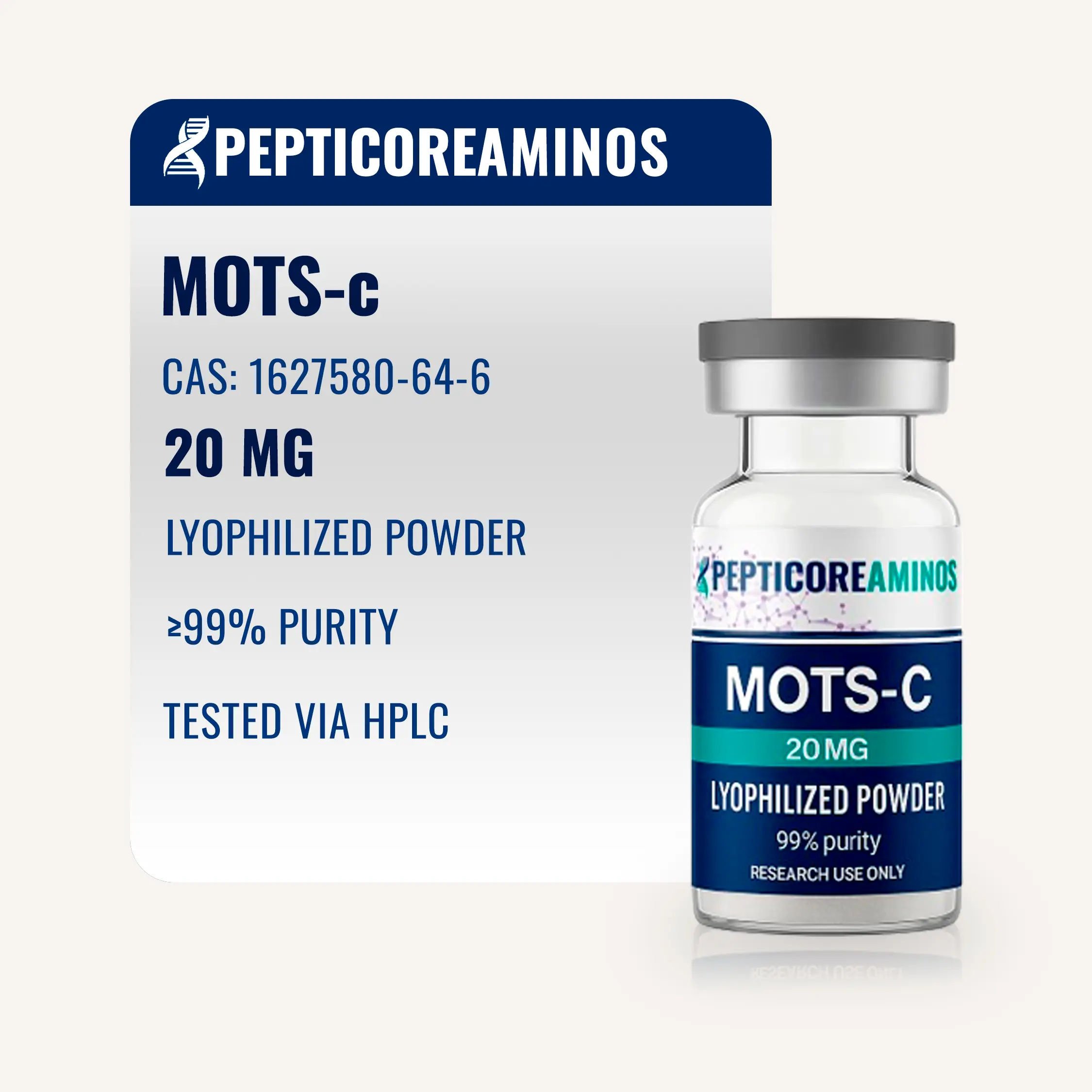
mitochondrial peptide for research on metabolism, longevity, cellular function, and energy regulation.
What is MOTS-c
MOTS-c is a mitochondrial peptide composed of 16 amino acids and belongs to the group of mitochondrial-derived peptides (MDPs), a family of small bioactive molecules produced by mitochondria that participate in intracellular communication and energy homeostasis. In experimental contexts it is studied for its ability to modulate the use of energy substrates, support insulin sensitivity, and promote adaptive responses to metabolic stress. Interest in MOTS-c also stems from its potential impact on processes linked to obesity, diabetes, aging, and tissue integrity, acting as a “messenger” between mitochondrion and nucleus.
MOTS-c and muscle metabolism
In skeletal muscle, MOTS-c has been investigated for its capacity to promote glucose uptake and the efficiency of ATP production. By activating the AMPK pathway, it increases the translocation of glucose transporters and enhances the utilization of energy substrates, even when the insulin response is reduced. In preclinical models this is associated with better metabolic performance, support of lean mass, and reduced fatigue, partially overlapping with the benefits of physical exercise (an “exercise-mimetic” action).
MOTS-c and lipid metabolism
On the lipid side, MOTS-c has been evaluated for its impact on adipose tissue and thermogenesis. AMPK activation favors fatty acid oxidation, energy expenditure, and the functionality of brown adipose tissue, helping limit fat accumulation. In parallel, in white adipose tissue it modulates local inflammation and the cytokine profile, which together contribute to improved insulin sensitivity. A distinctive feature is the peptide’s ability to translocate to the nucleus in response to metabolic stress and reprogram the expression of genes involved in the antioxidant response and glucose management, underscoring the bidirectional mitochondria–nucleus dialogue.
Liver, mitochondria, and insulin resistance
Mitochondrial dysfunction in the liver can promote ectopic lipid accumulation, reduced fat oxidation, and the emergence of insulin resistance. Under unfavorable dietary scenarios (e.g., high-fat regimens or excess fructose), mitochondria lose efficiency, triggering cascades that affect obesity, hepatic steatosis, and alterations of glucose metabolism. By modulating cellular energy programs and redox balance, MOTS-c is being studied as a lever to restore a more favorable metabolic balance and counter the hallmarks of hepatic metabolic dysfunction.
Biomarkers and insulin sensitivity
Plasma concentrations of MOTS-c have been correlated, in various research settings, with indices of insulin sensitivity. Associations appear clearer in lean individuals or those with a relatively preserved metabolic profile, and tend to diminish in the presence of obesity or systemic inflammation. This suggests the peptide may act as an adaptive modulator of metabolic status and potentially as an early indicator of changes in glycemic regulation. Thresholds, intra-individual variability, and clinical utility still require definition in larger controlled studies.
MOTS-c, osteoblasts, and bone integrity
Beyond metabolism, the peptide is considered in research on bone biology. In vitro evidence indicates that MOTS-c can stimulate type I collagen synthesis in osteoblasts and support the differentiation of mesenchymal stem cells toward the osteogenic lineage, involving the TGF-β/SMAD pathway. Together, these signals align with a potential support of bone formation and maintenance of tissue architecture—areas relevant to models of osteoporosis and bone degeneration.
Metabolic resilience and healthy aging
Because mitochondria orchestrate ATP production and the management of oxidative stress, mitochondrial peptides are central to healthspan research. By acting on nutrition-dependent gene expression and stress-adaptive pathways, MOTS-c is being evaluated as a potential metabolic resilience factor associated with more favorable aging. Certain genetic variants of the peptide have been observed in cohorts with exceptional longevity, an hypothesis that fuels the link between mitochondrial efficiency and a longer life in good health.
Endothelium and cardiovascular function
Endothelial function is an early marker of vascular health. In experimental models, lower levels of MOTS-c are associated with reduced vascular reactivity and signs of endothelial dysfunction. Pretreatment with the peptide can improve responsiveness to mediators such as acetylcholine, suggesting a supportive role in vascular tone and endothelial bioenergetics. These findings place MOTS-c among candidates for research on cardiovascular prevention and the modulation of metabolism-related risk factors.
Evidence limits and intended use
Despite a growing body of studies, much of what we know about MOTS-c comes from preclinical models or preliminary observations. Open questions remain regarding dosage, exposure time, individual variability, and the translatability of results to humans. Accordingly, the content presented here is for descriptive purposes within experimental research only. Where available, the product is intended solely for qualified personnel, is not approved for human or veterinary use, and must not be used for diagnostic or therapeutic purposes.
Summary
MOTS-c emerges as a bioenergetic modulator acting on multiple fronts: muscle (glucose uptake and mitochondrial efficiency), adipose tissue (lipid oxidation, thermogenesis, inflammation), liver (redox balance and lipid handling), bone (collagen and osteogenic differentiation), and endothelium (vascular reactivity). Through pathways such as AMPK and TGF-β/SMAD, it helps restore energy homeostasis and support cellular resilience. This profile makes it a molecule of primary interest in the biology of aging and metabolic disorders—strictly within the scope of laboratory research.