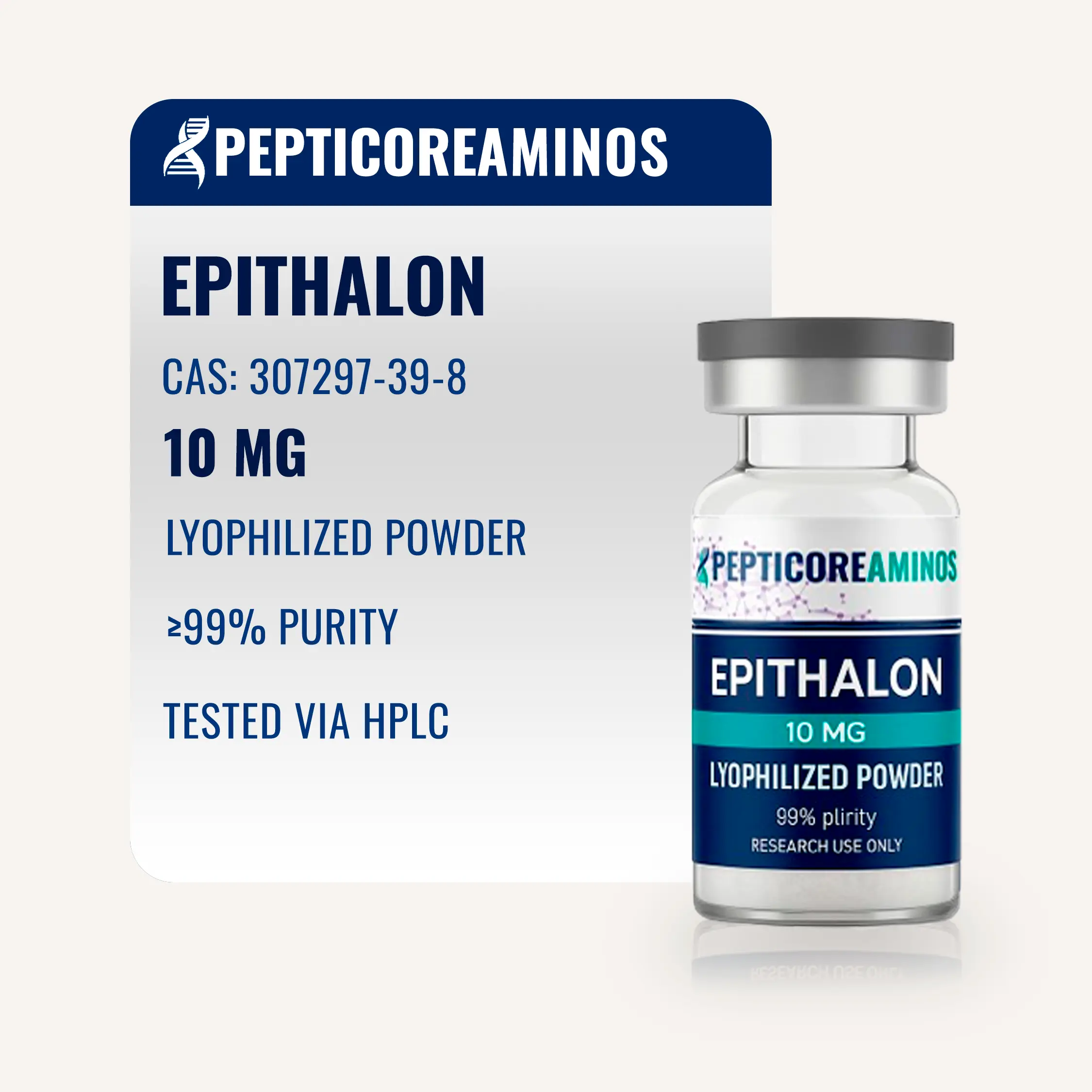



Epithalon
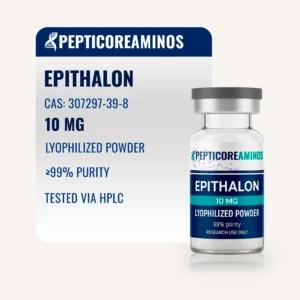
Synthetic tetrapeptide for research on telomerase activation, DNA protection, cellular longevity, and melatonin regulation.
What is Epithalon
Epithalon (also known as Epitalon, Epithalone, or Epithalamin) is a synthetic tetrapeptide composed of the amino acids Ala–Glu–Asp–Gly. It is a synthetic derivative of Epithalamin, a natural extract of the pineal gland discovered in the 1980s by Professor Vladimir Khavinson. In research contexts, Epithalon is studied for its ability to activate the telomerase enzyme—responsible for protecting telomeres, the ends of DNA chromosomes—and for its role in stimulating melatonin secretion. These properties make it a compound of great interest in the fields of cellular aging research, tissue regeneration, and neuroendocrinology.
The Role of Telomerase in the Anti-Aging Effects of Epithalon
Early studies conducted on insects, mice, and rats demonstrated that Epithalon can significantly extend lifespan and improve cellular function. In research models, the peptide reduced mortality rates and increased longevity, even in animals predisposed to cardiovascular diseases and tumors. One of the primary mechanisms underlying these effects is its ability to neutralize free radicals, thereby reducing oxidative stress and protecting cells from structural damage.
In addition to its antioxidant activity, Epithalon acts as a telomerase activator—an enzyme that repairs and lengthens telomeres, the repetitive DNA sequences at the ends of chromosomes that are essential for genetic stability. Over time, telomeres naturally shorten with each cell division, leading to a gradual loss of genetic integrity. Activation of telomerase by Epithalon helps maintain telomere integrity, reduces DNA replication errors, and supports cellular longevity. This mechanism directly contributes to slowing the process of cellular aging and preventing genetic damage that may lead to dysfunction or disease.
Epithalon and DNA Activation
Beyond its influence on telomeres, Epithalon appears to interact directly with DNA by modulating the expression of specific genes. Studies in cell cultures have shown that the peptide acts on the promoter regions of certain genes, promoting their activation. These include CD5 and IL-2 (which regulate immune function), MMP2 (involved in the extracellular matrix of skin and connective tissue), and Tram1 (associated with protein synthesis and cellular repair processes).
This mechanism suggests that Epithalon may help support immune function and promote tissue regeneration by enhancing the activity of genes involved in the cellular response. In studies on aging lymphocytes, the peptide has been shown to increase interferon gamma levels—a key immune signaling molecule that activates macrophages, NK cells, and T cells. These findings indicate that Epithalon may play a role in immune rejuvenation and protection against age-related immune decline.
Epithalon and Skin Regeneration
A notable aspect of Epithalon research focuses on its effects on skin and fibroblasts. The peptide has been shown to activate the MMP2 gene, which is involved in the production of collagen and elastin—key structural components of the skin. In experiments on rats, Epithalon stimulated fibroblast proliferation by up to 45%, promoting tissue repair and maintaining skin integrity during aging.
Furthermore, Epithalon reduces the activity of the caspase-3 enzyme, a regulator of apoptosis (programmed cell death). By inhibiting caspase-3, the peptide helps extend the lifespan of skin cells and limits structural degeneration typical of aging. At the same time, it stimulates the expression of Ki-67 and CD98hc proteins, which are associated with regeneration and cellular metabolism. In summary, Epithalon shows strong potential as a research model for studying skin healing and rejuvenation processes.
Epithalon and Tumor Growth
Another important research area concerns the anti-tumor effects of Epithalon. In studies on rats and mice, daily administration of the peptide resulted in a reduction in tumor growth and a decrease in metastasis formation in distant tissues. This effect was more pronounced in animals exposed to natural light cycles, suggesting a correlation with circadian rhythm regulation.
Epithalon has also demonstrated the ability to activate the PER1 gene, which regulates circadian rhythm and is often underexpressed in cancer patients. Activation of PER1 is associated with increased sensitivity of cancer cells to DNA damage-induced apoptosis, potentially reducing the radiation doses required and limiting side effects. These findings open new research pathways for the potential use of Epithalon in tumor growth prevention and as a support in experimental cancer therapies.
Epithalon and Melatonin Secretion
The Epithalon peptide also influences the regulation of melatonin, the pineal gland hormone associated with sleep–wake cycles. Animal model studies have shown that Epithalon stimulates transcription of the AANAT and pCREB genes, both of which are essential for melatonin synthesis and secretion. In elderly primates, treatment with Epithalon restored night-time melatonin levels to physiological values, reestablishing a balanced circadian rhythm and normal endocrine regulation.
Epithalon and Visual Function
Another research area explores the protection of the retina. Experiments on rats with retinitis pigmentosa have shown that Epithalon improves retinal bioelectrical function and preserves the morphological structure of ocular tissues in over 90% of cases. These findings suggest that the peptide acts on transcriptional mechanisms shared between the pineal gland and retina, supporting further studies on ocular neuroprotection and retinal regeneration.
Safety Profile
In animal models, Epithalon has shown high subcutaneous bioavailability, excellent tolerability, and no significant toxic effects. It is not intended for human or veterinary use, but exclusively for scientific and experimental research. All information provided is based on preclinical studies and peer-reviewed scientific publications for educational purposes.