


BPC-157
Pentadecapeptide for research on tissue regeneration, angiogenesis, and cellular protection.
What is BPC-157
BPC-157 (Body Protection Compound-157) is a peptide composed of 15 amino acids, partially derived from a natural sequence found in human gastric juice. It is considered a research compound with pronounced cytoprotective and regenerative properties, widely studied in preclinical animal and cell models.
Its natural biological function is to help maintain the integrity of the gastrointestinal mucosa and support tissue healing processes. Several studies have shown that BPC-157 promotes fibroblast proliferation, new blood vessel formation, and collagen synthesis, contributing to the repair of muscles, tendons, ligaments, and mucosal tissues (Staresinic et al., 2003).
Mechanism of Action: Angiogenesis and Tissue Repair
BPC-157 acts through multiple biological mechanisms that cooperate in wound repair. One of the most studied is the stimulation of angiogenesis—the process of forming new blood vessels from existing ones. This occurs partly through activation of the VEGFR2 receptor and modulation of Akt/eNOS signaling pathways, both essential for endothelial cell survival and vascular growth (Chang et al., 2010; Hsieh et al., 2017).
The peptide also influences connective tissue by stimulating fibroblast migration and extracellular matrix deposition. This leads to faster and more stable healing, with improved mechanical strength in the repaired tissues. The combined effects on angiogenesis, collagen formation, and cellular proliferation make BPC-157 one of the most promising peptides for research on tissue regeneration.
Observed Effects on Tissues and Healing
In preclinical studies, BPC-157 has demonstrated versatile biological activity across multiple systems.
Tendon and Ligament Healing
Tendon and ligament injuries typically heal slowly due to limited blood supply. In animal models, BPC-157 significantly improved the regeneration of these tissues, increasing fibroblast density and the formation of well-organized collagen fibers (Novinscak et al., 2008). Research also revealed an increase in key migration-related proteins such as paxillin and FAK, indicating direct stimulation of the cellular repair process.
Muscle and Skin Healing
In muscle injury models, BPC-157 accelerated regeneration and functional recovery, reduced necrosis, and improved vascularization. Similar effects were reported in skin wounds and burns, where BPC-157 enhanced re-epithelialization and the development of higher-quality granulation tissue (Prkacin et al., 2001).
Neurovascular and Gastroprotective Effects
Beyond its local effects, BPC-157 exhibits systemic potential by modulating microcirculation and protecting organs. In ischemic animal models, it improved cerebral perfusion and reduced neuronal damage, suggesting a role in maintaining vascular integrity and nitric oxide balance (Vukojević et al., 2021). In the gastrointestinal tract, BPC-157 protects the mucosa from damage caused by ethanol, indomethacin, and oxidative stress (Šikirić et al., 1996).
Antioxidant and Protective Properties
Several studies have confirmed that BPC-157 reduces oxidative stress and supports cellular defense mechanisms. In rat models, it decreased nitrite, nitrate, and malondialdehyde (MDA) levels—biomarkers of lipid peroxidation and oxidative damage. More recently, delivery through Lactococcus lactis has been shown to increase intestinal concentrations of the peptide and enhance mucosal protection.
Drug Interaction and Cytoprotective Research
Another area of research interest involves BPC-157’s ability to counteract certain drug-induced side effects. Experimental studies demonstrated that it reduces gastric lesions caused by NSAIDs such as ibuprofen and celecoxib. It also protects the heart and nervous system from QTc prolongation and neuromotor disturbances induced by antipsychotic or dopaminergic drugs. These findings position BPC-157 as an important model for research into cytoprotection and oxidative balance.
Notes and Warnings
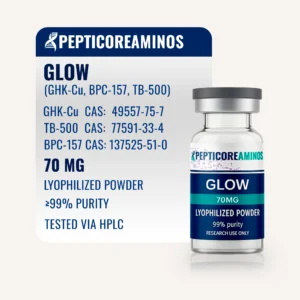
The BPC-157 provided by Pepticore Aminos is intended exclusively for scientific and laboratory research use. It is not approved for human or animal consumption and must not be used as a medicine or diagnostic tool. All information presented is for educational and research purposes only and is based on publicly available preclinical studies.