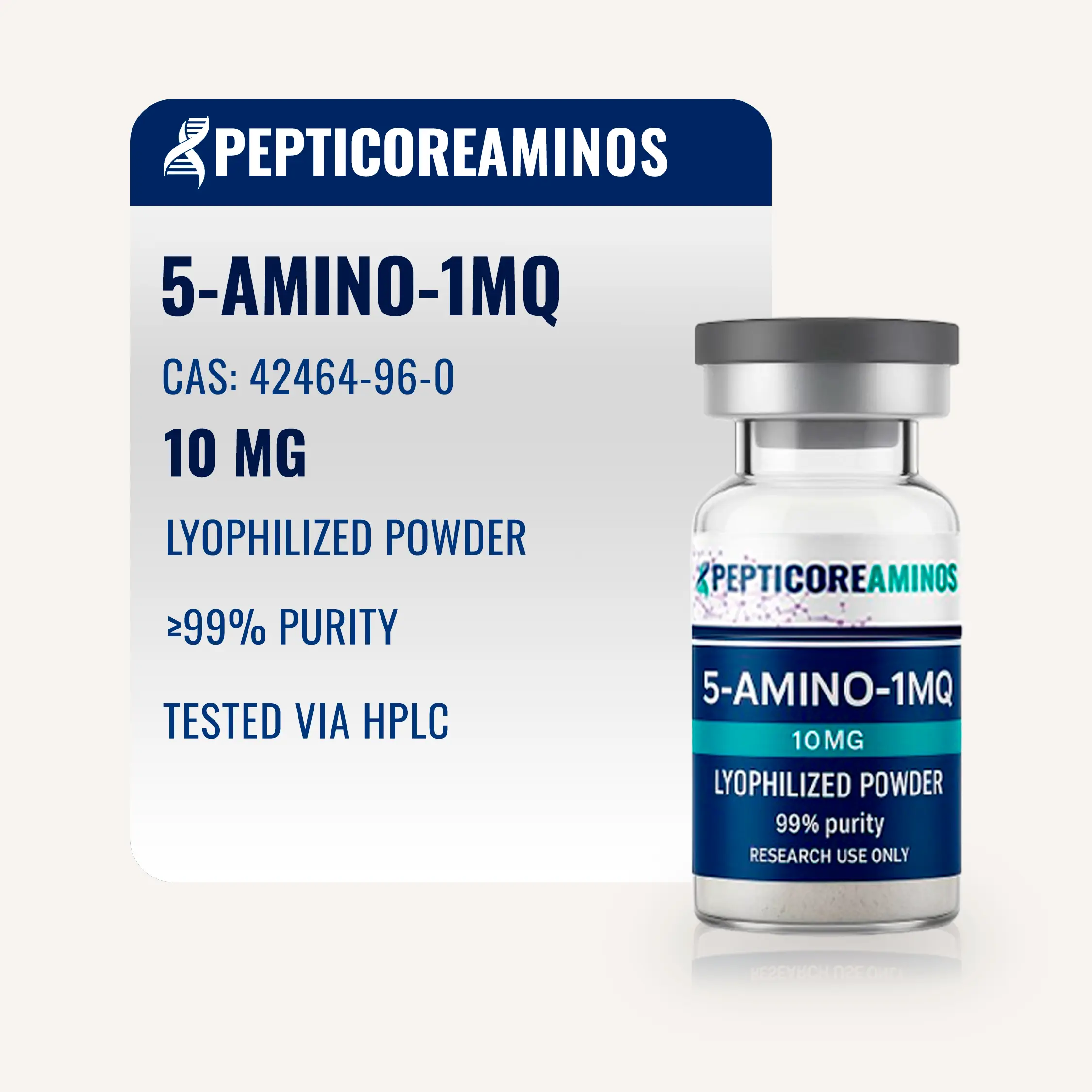




5-Amino-1MQ – Molecule for Advanced Metabolic Regulation
5-Amino-1MQ is a small molecule highly permeable to cell membranes, studied for its ability to selectively inhibit the enzyme nicotinamide N-methyltransferase (NNMT). This enzyme plays a central role in energy metabolism and is particularly abundant in adipose tissue and the liver. Modern research has shown that excessive NNMT activity is closely associated with obesity, type 2 diabetes, insulin resistance, metabolic slowdown, and even degenerative and tumor processes.
Inhibition of NNMT by 5-Amino-1MQ increases intracellular levels of NAD+, a key molecule in cellular metabolism, energy production, and mitochondrial function. The rise in NAD+ in turn activates SIRT1, known as the “longevity gene,” involved in regulating anti-inflammatory, cardiometabolic, and neuroprotective processes. This mechanism makes 5-Amino-1MQ one of the most studied molecules in the field of advanced metabolic research.
Role of NNMT in obesity and metabolism
NNMT is a cytosolic enzyme highly active in white adipose tissue and hepatocytes. Elevated levels of this protein have been associated with a decrease in the GLUT4 transporter, a crucial protein for glucose uptake in skeletal muscle, cardiac tissue, and adipose tissue. The amount of GLUT4 is one of the main factors determining insulin sensitivity and the body’s ability to maintain normal blood glucose levels.
In animal models, high NNMT levels correlate with marked insulin resistance and a greater predisposition to developing type 2 diabetes. Conversely, high GLUT4 levels correspond to a more efficient metabolism, a greater ability to burn calories, and natural protection against metabolic diseases. This correlation also explains why individuals with greater GLUT4 expression tend to have a so-called “fast metabolism”.
The link between NNMT and GLUT4 has led numerous researchers, including Dr. Barbara Kahn of Harvard Medical School, to identify NNMT as the ideal target for intervention on obesity and diabetes. The central idea is simple yet revolutionary: reducing NNMT activity makes the metabolism less efficient at storing energy, forcing the body to “waste” calories instead of storing them as fat.
Effects of 5-Amino-1MQ on fat loss
NNMT inhibition reduces the conversion of nicotinic acid into 1-methylnicotinamide, a process that directly affects the body’s energy efficiency. When NNMT is blocked, the body uses energy more rapidly, reducing fat storage and increasing oxidation of energy substrates.
Studies in mice show surprising results: only ten days of 5-Amino-1MQ administration leads to a 7% reduction in body mass and a 30% decrease in fat mass, with no reduction in caloric intake. Cholesterol levels in treated mice returned to values similar to those of non-obese animals, demonstrating a profound impact on lipid metabolism.
These results indicate that fat loss is due to improved cellular metabolism rather than changes in eating behavior. It is the modulation of cellular biochemistry—not caloric restriction—that supports the reduction in body fat.
Increase in GLUT4 expression and glucose metabolism
One of the most important effects of 5-Amino-1MQ is its ability to increase GLUT4 expression. With more GLUT4 transporters available, muscle and fat cells absorb glucose more efficiently, lowering blood sugar and improving glucose tolerance.
This improvement does not depend on weight loss: it means the peptide provides glycemic regulation benefits even before significant reductions in body mass. This makes it an interesting candidate for research on pre-diabetes and insulin resistance.
Furthermore, recent studies show that the increase in GLUT4 induced by 5-Amino-1MQ pushes adipocytes to produce a specific class of lipids known as PAHSAs (palmitic acid esters of hydroxy stearic acid). These lipids exhibit anti-diabetic and anti-inflammatory effects, protecting the body from cardiovascular diseases, reducing chronic inflammation, and improving insulin sensitivity.
Effects on muscle function and regeneration
5-Amino-1MQ also shows significant impact on muscle functionality. The peptide stimulates GLUT4 expression in muscles, increasing energy efficiency and glucose utilization. However, one of the most fascinating aspects concerns its effect on muscle stem cells.
In aged mouse models (24 months), NNMT inhibition greatly increased activation of muscle stem cells after injury. Treated animals showed muscle fibers with a cross-sectional area double that of controls and 70% higher contractile strength. This suggests a potential role for 5-Amino-1MQ in research on muscle regeneration, sarcopenia, and degenerative diseases such as Duchenne muscular dystrophy.
Additionally, the increase in NAD+ levels induced by 5-Amino-1MQ improves mitochondrial function, reduces inflammation, and counteracts muscle fibrosis. These effects collectively contribute to significant improvements in muscle tissue quality.
Possible cognitive benefits
NAD+ is also essential for the health of the nervous system. Reduced NAD+ levels impair synaptic transmission and neuromuscular function, negatively affecting cognition and motor coordination. Although 5-Amino-1MQ has not yet been directly tested as a nootropic agent, the systemic increase in NAD+ suggests potential positive effects on brain function.
There is strong scientific interest in the possibility that 5-Amino-1MQ may help prevent cognitive disorders or improve neuronal resilience, although dedicated studies are still required.
Role of NNMT in cancer
Research shows that NNMT is overexpressed in various types of tumors, including gastric carcinoma, pancreatic carcinoma, renal carcinoma, and bladder cancers. Animals lacking the NNMT gene display resistance to developing these tumor forms, suggesting a causal role for the enzyme.
NNMT inhibition is gaining growing interest in cancer research, as reducing the enzyme’s activity may decrease the aggressiveness of certain neoplasms. Although the direct effect of 5-Amino-1MQ on cancer is still under study, the molecule represents an important tool for investigating the connection between metabolism, epigenetics, and tumors.
Scientific References
PubMed 15928024
PMC Article
PubMed 27288004
PubMed 30753815
PubMed 28291578
PubMed 27798264
Nature Article
Warning
5-Amino-1MQ is intended exclusively for scientific research. It is not intended for human, therapeutic, or veterinary use.