
What Are Peptides?
Discover what peptides are, how they work, and why they play a key role in scientific research.
What Are Peptides?
Peptides are short chains of amino acids connected by peptide bonds. They form the building blocks of proteins and are involved in a wide range of essential biological functions.
Thanks to their compact, modular structure, peptides can take on very different roles: they act as hormonal messengers, neurotransmitters, regulators of cellular communication, promoters of tissue regeneration and precursors to more complex proteins.
Their ability to act selectively, combined with the possibility of being synthesized with high purity, makes them indispensable tools in modern biotechnological and pharmacological research.
capacità di agire in modo selettivo, insieme alla possibilità di essere sintetizzati con elevata purezza, li rende strumenti indispensabili per la ricerca biotecnologica e farmacologica moderna.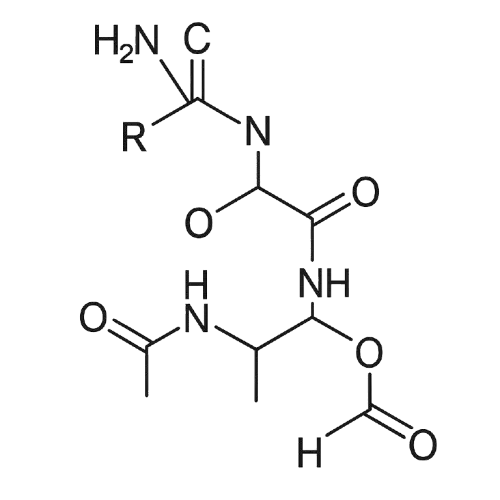

Structure and Functions of Peptides
The combination and order of amino acids define the three-dimensional structure that determines a peptide’s specific function. Some act as hormones and neurotransmitters, while others serve as intercellular signaling molecules or regenerative factors.
They regulate vital processes such as tissue repair, the control of cellular metabolism, and the immune response. Bioactive peptides, for example, exhibit antimicrobial, immunomodulatory, or antioxidant activity.
Thanks to their specificity of action and their ability to be produced in pure form, peptides are key components in the development of targeted therapies, advanced serums, and cutting-edge research applications.
PEPTIDES IN RESEARCH
Peptides represent a constantly evolving field of research. Studying their properties helps to understand the biological mechanisms behind numerous cellular processes and to develop new experimental approaches in the biotechnological and pharmacological sectors.

PHARMACOLOGY
Pharmacology research
New targeted therapies based on specific mechanisms of action.

BIOTECHNOLOGY
Biotechnology research
Development of innovative biomaterials and controlled release systems.

ANTI-AGING
Anti-aging research
Research on anti-aging and regenerative peptides for advanced topical applications.

REGENERATIVE
Medical research
Stimulation of cellular processes and support for tissue repair.
- ADVANTAGES
In-depth understanding of peptide biological mechanisms.
Opportunity to develop new research applications.
Improved knowledge of cellular and molecular interactions.
Support for studies on anti-aging and regenerative processes.
Experimental applications in pharmacology and biotechnology.
Useful for developing curative and regenerative medicine approaches.
- LIMITATIONS
Further preclinical and clinical studies required.
Results may vary depending on experimental models.
Stability and purity must be verified through laboratory testing.
Restricted exclusively to scientific research purposes.
Not intended for human or therapeutic use.
FAQ – Peptides in Research
Research on peptides helps to better understand the molecular mechanisms behind physiological and pathological processes, promoting new experimental approaches in biotechnology and pharmacology.
Peptides are investigated in various research areas, including pharmacology, biotechnology, regenerative medicine, and anti-aging studies.
Each research peptide undergoes purity and compliance testing in specialized laboratories to ensure quality and reproducibility of experimental results.
Ogni peptide destinato alla ricerca viene sottoposto a test di purezza e conformità da parte di laboratori specializzati, per garantire la qualità e la riproducibilità dei risultati sperimentali.
PEPTICORE AMINOS – ADVANCED PEPTIDE RESEARCH.
Innovative synthesis, laboratory analysis, and biomolecular development for experimental applications in pharmacology, biotechnology, anti-aging and regenerative medicine.
