
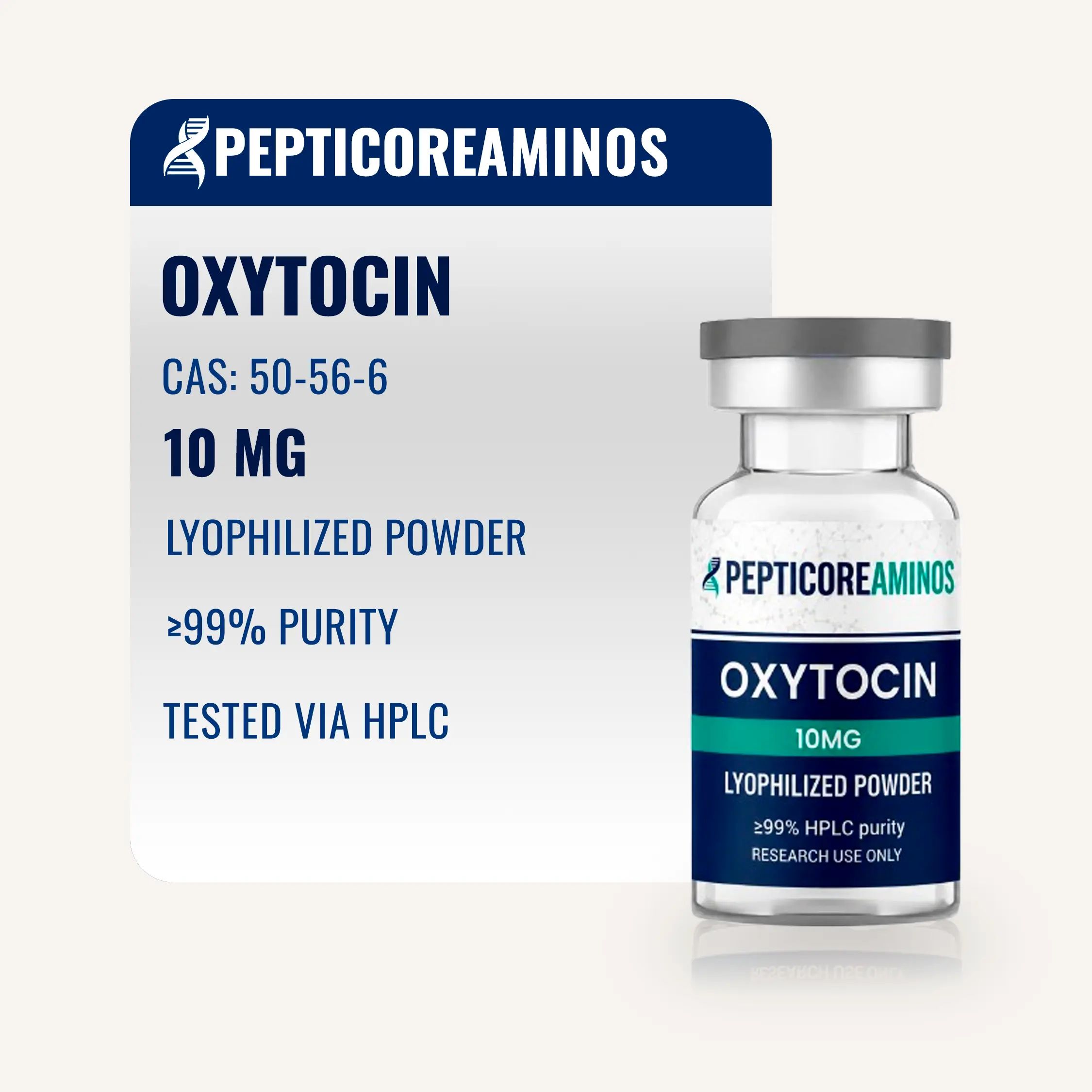
Oxytocin
Oxytocin, also known as oxytocin, is a natural neuropeptide composed of nine amino acids. In biological systems, it is primarily produced in the hypothalamus and released by the posterior pituitary, where it acts both as a circulating hormone and as a signaling molecule in the central nervous system.
From a structural perspective, Oxytocin is a cyclic nonapeptide characterized by a disulfide bridge between two cysteine residues. This compact conformation is one of the elements that determines its interaction with the oxytocin receptor, known as OXTR, a G protein-coupled receptor expressed in various central and peripheral tissues.
In scientific research, Oxytocin is studied for its role in neuroendocrine communication mechanisms and in the modulation of cellular signals associated with social behavior, stress response, receptor binding, and physiological regulation. Its ability to act both peripherally and centrally makes it a model of particular interest for studies on neuropeptides, GPCR receptors, and intracellular pathways.
The most common research applications involve analyzing the interaction between Oxytocin and the OXTR receptor, evaluating signal transduction, studying the neurobiological circuits involved in social behavior, and exploring its experimental effects on models of stress, behavior, metabolic regulation, and energy homeostasis.
In recent years, interest in Oxytocin has also expanded into emerging research areas, including metabolism, glycemic control, body composition, and communication between the central nervous system and peripheral tissues. These areas are mainly studied through preclinical models, experimental formulations, and peptide analogs designed to better understand its stability, receptor selectivity, and biological activity.
As a peptide, Oxytocin is sensitive to enzymatic degradation and is normally studied under controlled experimental conditions. In laboratory settings, this makes it useful for observing the behavior of bioactive peptides, molecular stability, receptor response, and differences between various modes of experimental exposure.
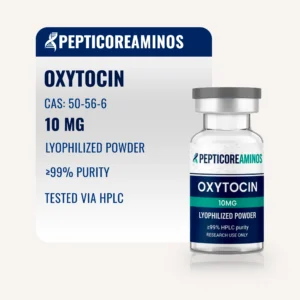
Oxytocin Pepticore is intended exclusively for research and laboratory applications. The product is supplied in lyophilized form and accompanied by batch analytical documentation, supporting experimental studies that require traceability, documented purity, and confirmation of molecular identity.
Research use only: product intended exclusively for laboratory and research use. Not intended for human consumption, veterinary, diagnostic, therapeutic, or food use.

Reviews
There are no reviews yet.