
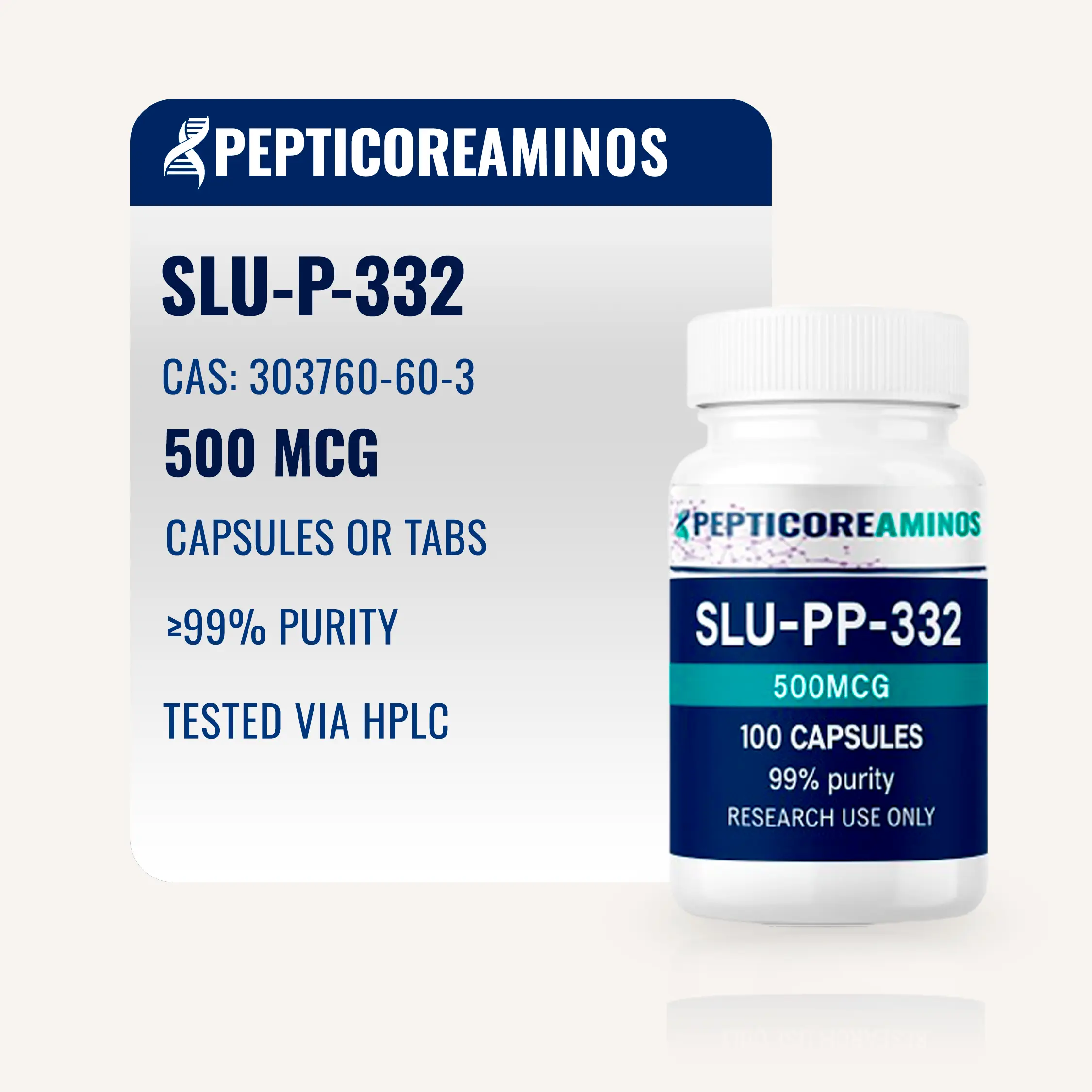


SLU-PP-332 – Experimental compound mimicking the metabolic effects of exercise
SLU-PP-332 is an experimental compound designed to mimic the metabolic effects of exercise by activating the estrogen-related receptors (ERRs), particularly ERRα, ERRβ, and ERRγ. This activation increases energy expenditure, enhances fatty acid oxidation, and improves mitochondrial function. It is considered one of the most promising molecules in modern research for reproducing the cellular benefits of exercise, with potential implications for metabolism, cardiovascular health, and longevity.
Overview and Research Context
It is well known that regular physical exercise improves cardiovascular health, metabolism, mood, and cognitive function, while also reducing the risk of chronic diseases. However, replicating the full range of exercise benefits pharmacologically has always been a challenge. Until recently, most attempts — including weight loss drugs — achieved limited success. With the introduction of molecules such as semaglutide and liraglutide, metabolic modulation entered a new era, but SLU-PP-332 represents a further step forward: an estrogen-related receptor (ERR) agonist capable of activating the same metabolic pathways stimulated by exercise.
In preclinical models, SLU-PP-332 binds primarily to ERRα and ERRγ, stimulating gene expression that regulates energy homeostasis and mitochondrial biogenesis. This activity leads to enhanced fat oxidation, improved muscle function, and greater exercise tolerance. Animal studies have demonstrated a marked reduction in body fat and a significant increase in endurance, suggesting potential benefits for obesity, metabolic syndrome, and aging.
Biological Role of ERR Receptors
Estrogen-related receptors (ERRs) are nuclear transcription factors that regulate genes involved in energy metabolism and mitochondrial production. Although they share genetic homology with estrogen receptors, they are not regulated by sex hormones — their name derives solely from structural similarity. There are three main isoforms: ERRα, ERRβ, and ERRγ.
Experiments conducted on mice genetically lacking the ERRα and ERRγ genes showed marked exercise intolerance, paler muscles, and reduced oxidative capacity. This indicates that these receptors are essential for exercise tolerance and lipid metabolism. ERRα, in particular, regulates genes involved in gluconeogenesis, fatty acid metabolism, and thermogenesis in brown adipose tissue, contributing to the regulation of glucose, cholesterol, and insulin levels.
SLU-PP-332 and Mitochondrial Function
One of the most significant mechanisms by which SLU-PP-332 acts is by improving mitochondrial function. The activation of ERRs stimulates mitochondrial biogenesis and increases mitochondrial density in muscle and heart cells, boosting energy production while reducing oxidative stress. This results in better cellular efficiency and greater resistance to muscle fatigue.
Animal studies have shown that mice treated with SLU-PP-332 twice daily for one month lost up to 12% of their body weight without changes in diet or activity level. In addition, ERRγ expression correlated with increased vascular density in skeletal muscle, leading to better nutrient delivery and improved insulin sensitivity. These effects confirm SLU-PP-332 as a true “exercise mimetic”.
Effects on Heart, Muscles, and Brain
In animal models of heart failure, SLU-PP-332 improved ejection fraction, reduced cardiac fibrosis, and increased survival rates. By enhancing fatty acid oxidation and promoting autophagy through TFEB activation, it helps eliminate damaged cells and supports healthy tissue renewal, preserving optimal cardiac function.
In the central nervous system, ERRγ activation by SLU-PP-332 has shown potential in protecting neurons from oxidative stress and mitochondrial dysfunction associated with Parkinson’s disease. Overexpression of ERRγ reduces α-synuclein toxicity and slows neurodegenerative progression, suggesting a promising therapeutic pathway.
SLU-PP-332 and Aging
Mitochondrial dysfunction is one of the main hallmarks of aging. As mitochondrial efficiency declines, oxidative stress increases, leading to cellular senescence and chronic inflammation. Studies have shown that ERR activity decreases with age but remains stable in organisms subjected to caloric restriction — a known method to extend lifespan.
Interestingly, treatment with SLU-PP-332 reproduces many of the protective effects of caloric restriction. It improves renal function, reduces inflammatory cytokines, and prevents mitochondrial degradation. By enhancing ERRα signaling, it mitigates the formation of free radicals, supporting long-term cellular vitality and delaying age-related decline.
Conclusion
SLU-PP-332 stands out as a groundbreaking discovery in metabolic and regenerative medicine. Acting as a dual ERRα/ERRγ agonist, it boosts mitochondrial energy production, enhances fat metabolism, increases physical endurance, and provides significant cardiovascular and neuroprotective benefits. Although still in early research stages, SLU-PP-332 represents the most advanced attempt to date at reproducing the benefits of exercise at the molecular level — paving the way for future therapeutic innovations in metabolism, aging, and cellular health.
References
- DOI: 10.34172/jre.2024.25143
- DOI: 10.1016/j.molmet.2023.101670
- DOI: 10.1093/eep/dvy002
- DOI: 10.1038/s41531-022-00369-w
- DOI: 10.1021/acschembio.2c00720
- DOI: 10.1113/JP278761
- ACS – Mimicking Exercise with a Pill
- Medical News Today – SLU-PP-332
- DOI: 10.1038/srep26442
- DOI: 10.1161/CIRCULATIONAHA.123.066542
- DOI: 10.1124/molpharm.124.000889
- DOI: 10.1172/JCI158447
- BCM Labs – Novel approach to heart failure


Reviews
There are no reviews yet.