
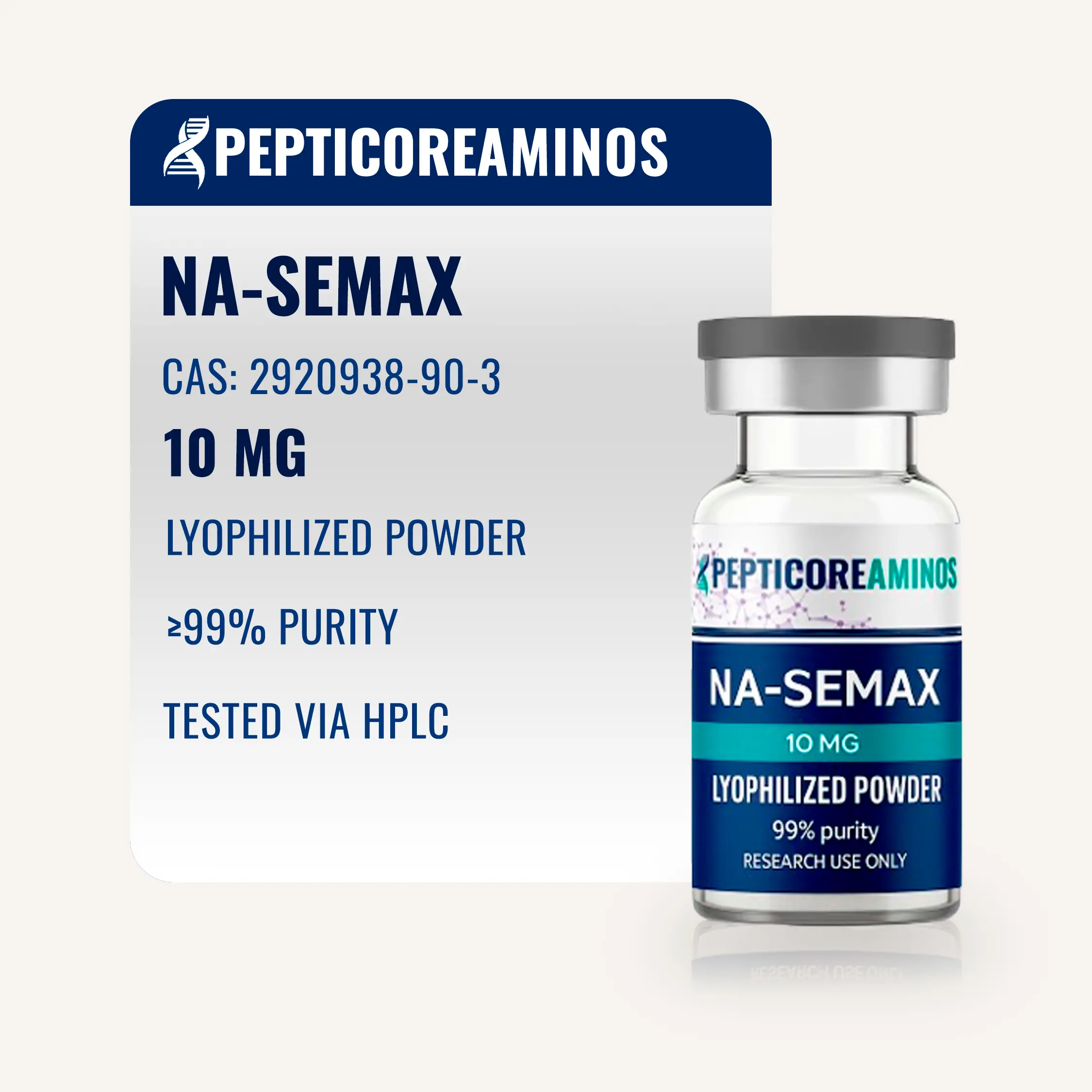




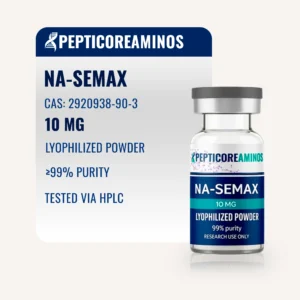
N-Acetyl Semax Amidate
Peptide sintetico per la ricerca su neuroprotezione, funzione cognitiva, rigenerazione neuronale e modulazione dell’umore.
What Is N-Acetyl Semax Amidate
N-Acetyl Semax Amidate is a synthetic peptide derived from a short sequence of the adrenocorticotropic hormone (ACTH), specifically amino acids 4–10. Originally developed in Russia, this compound has been studied for its neuroprotective, neurotrophic, and neuromodulatory properties. In research settings, Semax and its acetylated variants are evaluated for their ability to support cognitive functions, improve memory, and promote neuronal recovery in models of ischemic stroke, dementia, and optic nerve inflammation. It has also shown potential antidepressant and anxiolytic effects, possibly through the regulation of serotonin and dopamine levels in the central nervous system.
Mechanism of Action and Biochemical Role
Semax acts as an analogue of ACTH but lacks its peripheral hormonal properties, focusing instead on the central nervous system. Experimental studies show that it promotes the transcription of neurotrophic factors such as BDNF (Brain-Derived Neurotrophic Factor) and NGF (Nerve Growth Factor), which are essential for neurogenesis, synaptogenesis, and neuronal plasticity. The increase in BDNF observed after administration of N-Acetyl Semax suggests an enhanced ability of the brain to adapt to stimuli and injury, supporting processes of learning, memory, and motor recovery.
In parallel, the peptide helps regulate neuronal redox balance and mitochondrial stability—critical for cell survival during oxidative or ischemic stress—yielding a combined profile of neuroprotection, gene modulation, and metabolic support for neural tissue.
Cognitive Effects and Brain Networks
Functional magnetic resonance imaging (fMRI) studies have shown that N-Acetyl Semax enhances the activity of the default mode network (DMN), a group of brain areas more active at rest than during focused tasks. This network contributes to environmental awareness, social attention, and self-reflection. Increased connectivity suggests improved baseline attention and cognitive readiness, enabling faster shifts from rest to focus
Strengthened communication between regions—particularly the prefrontal cortex and hippocampus—is associated with better problem-solving, memory, and creativity, indicating a potential global enhancement of neural connectivity.
N-Acetyl Semax in the Setting of Stroke
In the context of stroke and cerebral hypoxia, animal studies indicate that N-Acetyl Semax modifies the expression of numerous genes involved in vascular function and angiogenesis. These changes regulate smooth muscle cell migration, red blood cell formation, and new vessel growth, improving oxygen and nutrient delivery to damaged brain tissue.
Clinical research conducted in Russia associates Semax administration during post-stroke rehabilitation with faster motor recovery and higher plasma levels of BDNF, suggesting enhanced neuroplasticity and functional reorganization of the brain.
Gene Expression and Neurotrophic Factors
Research on healthy animal models shows that even a single intranasal dose of N-Acetyl Semax can rapidly influence gene expression in the frontal cortex and hippocampus, regions essential for attention, organization, memory, and learning. Gene activation occurs within 20 minutes of administration and particularly affects NGF and BDNF, reinforcing neuroplasticity and synaptic efficiency.
findings support the use of Semax as a model to explore molecular mechanisms of learning and memory and strategies to enhance cognitive performance.
N-Acetyl Semax Mood Regulation
Studies indicate that increased BDNF levels induced by Semax can help regulate mood and stress responses. In models of depression, the peptide normalizes serotonergic and dopaminergic function, suggesting an effect similar or complementary to SSRI antidepressants.
Unlike SSRIs, which often require weeks to achieve therapeutic results, Semax may act more directly via BDNF-linked neurogenesis and neuronal plasticity, potentially shortening response times—though this remains a preclinical observation.
Research Applications and Safety
In animal models, N-Acetyl Semax shows good subcutaneous bioavailability and a favorable safety profile with minimal side effects. However, dose translation from mice to humans is not linear, and no clinical use is approved. Current investigations remain within laboratory research, focusing on links between neuroprotection, post-ischemic recovery, and strong>cognitive function. The product is intended exclusively for scientific research and is not approved for human or veterinary use.

Reviews
There are no reviews yet.