
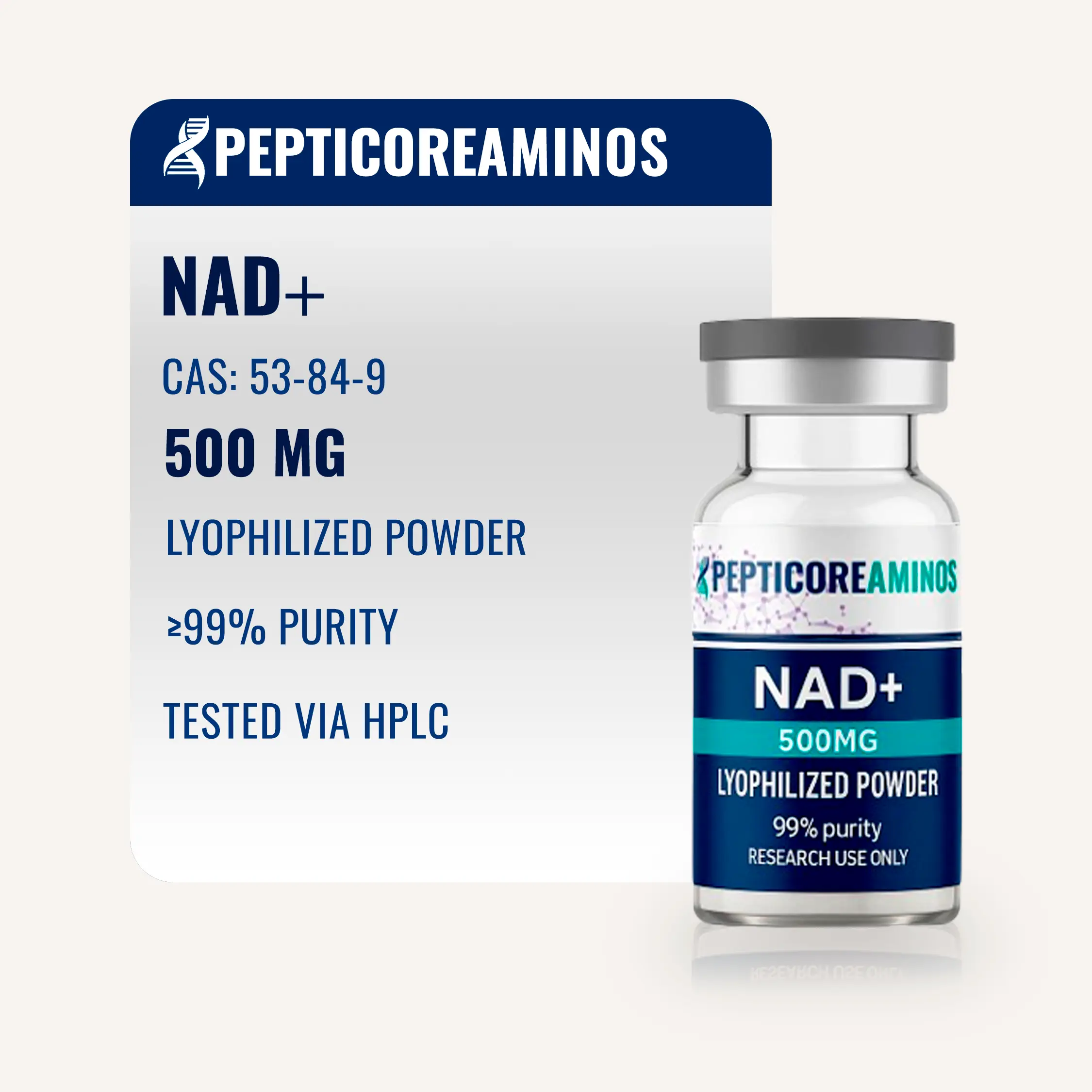




NAD⁺ — Essential Coenzyme for Metabolism, Longevity, and Cellular Function
Biochemical Role and Cellular Pathways
NAD⁺ acts as a cofactor in hundreds of enzymatic reactions. In mitochondrial bioenergetics, it supports glycolysis, the Krebs cycle, and the electron transport chain, functioning as an electron acceptor/donor to maintain the redox balance. At the same time, it serves as a substrate for sirtuins and PARPs (poly-ADP-ribose polymerases), enzyme families that link metabolism to chromatin state, DNA repair, and stress response. Sirtuins, which depend on NAD⁺, are involved in regulating gene expression, inflammatory control, and mitochondrial quality, while PARPs use NAD⁺ to coordinate DNA damage repair and ensure genomic stability.
NAD⁺ as an Extracellular Signal
In addition to its intracellular functions, NAD⁺ can also be released into extracellular spaces under specific physiological conditions. Research suggests that neurons in different tissues—such as blood vessels, the bladder, the colon, and certain brain regions—release NAD⁺ as a signaling molecule. This expands the understanding of its role: not only as an “energy carrier” but also as a mediator of cell-to-cell communication, possibly influencing smooth muscle tone and peripheral functions.
Cellular Aging, Homeostasis, and Resilience
The availability of NAD⁺ naturally declines with age and in many disease conditions. This reduction is linked to decreased DNA repair capacity, mitochondrial dysfunction, heightened inflammation, and impaired metabolic balance. Preclinical studies associate NAD⁺ modulation with benefits in energy conversion, DNA repair, immune defense, and circadian rhythm regulation. In animal models, restoring NAD⁺ levels has been correlated with improved mitochondrial quality, enhanced antioxidant balance, and greater functional stability of energy-demanding tissues such as muscles and neurons.
Mitochondrial Quality and Regulatory Networks
Mitochondria are increasingly viewed not only as “energy plants” but also as hubs for signaling that integrate innate immunity, metabolism, and stem cell activity. Within this context, NAD⁺ acts as a control node: adequate levels promote sirtuin-mediated deacetylation, mitochondrial biogenesis, and redox homeostasis. Conversely, low NAD⁺ levels have been associated with impaired nucleus-mitochondria communication, oxidative stress, and reduced cellular efficiency. In murine studies, replenishing NAD⁺ pools was shown to restore mitochondrial function and youthful gene expression patterns.
Nervous System, Muscle, and Vascular Health (Preclinical Evidence)
In experimental models, NAD⁺ supplementation has been linked to neuroprotection against oxidative stress, improved synaptic efficiency, and enhanced mitochondrial resilience. Adequate levels of the cofactor also regulate PGC-1α, a co-activator that promotes mitochondrial biogenesis and antioxidant defense. In muscle tissue, NAD⁺ has been associated with preserved oxidative capacity and metabolism, resulting in improved strength and endurance in aged models. On the vascular level, preclinical evidence indicates improved endothelial function and reduced age-related arterial changes, possibly through its signaling role in smooth muscle regulation.
Enzymatic Interactions and Repair Mechanisms
One of the most studied functions of NAD⁺ is its role in activating sirtuins and serving as a substrate for PARPs. Sirtuins control genetic programs and chromatin structure, influencing cellular aging and inflammatory balance. PARPs, active in the DNA damage response, consume NAD⁺ to catalyze ADP-ribosylation; excessive activity may deplete NAD⁺ pools, linking nuclear metabolism to overall energy balance. Together, these pathways highlight NAD⁺ as a central hub connecting genomic integrity, metabolism, and stress response.
Circadian Cycles, Immunometabolism, and Systemic Function
The metabolism of NAD⁺ is tightly connected to the circadian clock, influencing daily gene expression rhythms and redox state. Within the immune system, NAD⁺ availability has been linked to inflammatory regulation and metabolic activity in immune cells. Enzymes of the salvage pathway, responsible for regenerating NAD⁺, are associated with inflammation and complex metabolic conditions, reinforcing the idea that NAD⁺ serves as a key integrator between metabolism, immunity, and aging.
Research Context and Intended Use
Research Context and Intended Use
Sources and Further Reading
- Elysium Health – NAD overview
- Healthline – Nicotinamide Riboside
- NCBI PMC – NAD/NADH research (open access)
- WebMD – Resveratrol supplements
- Scientific American – Beyond Resveratrol: the NAD fad
- NCBI PMC – Review on NAD⁺ metabolism
- PubMed – Study 24786309
- PubMed – Study 23994518
- PubMed – Study 31065944
- PubMed – Study 25773161
- PubMed – Study 26215259
- FDA – Informazioni correlate


Reviews
There are no reviews yet.