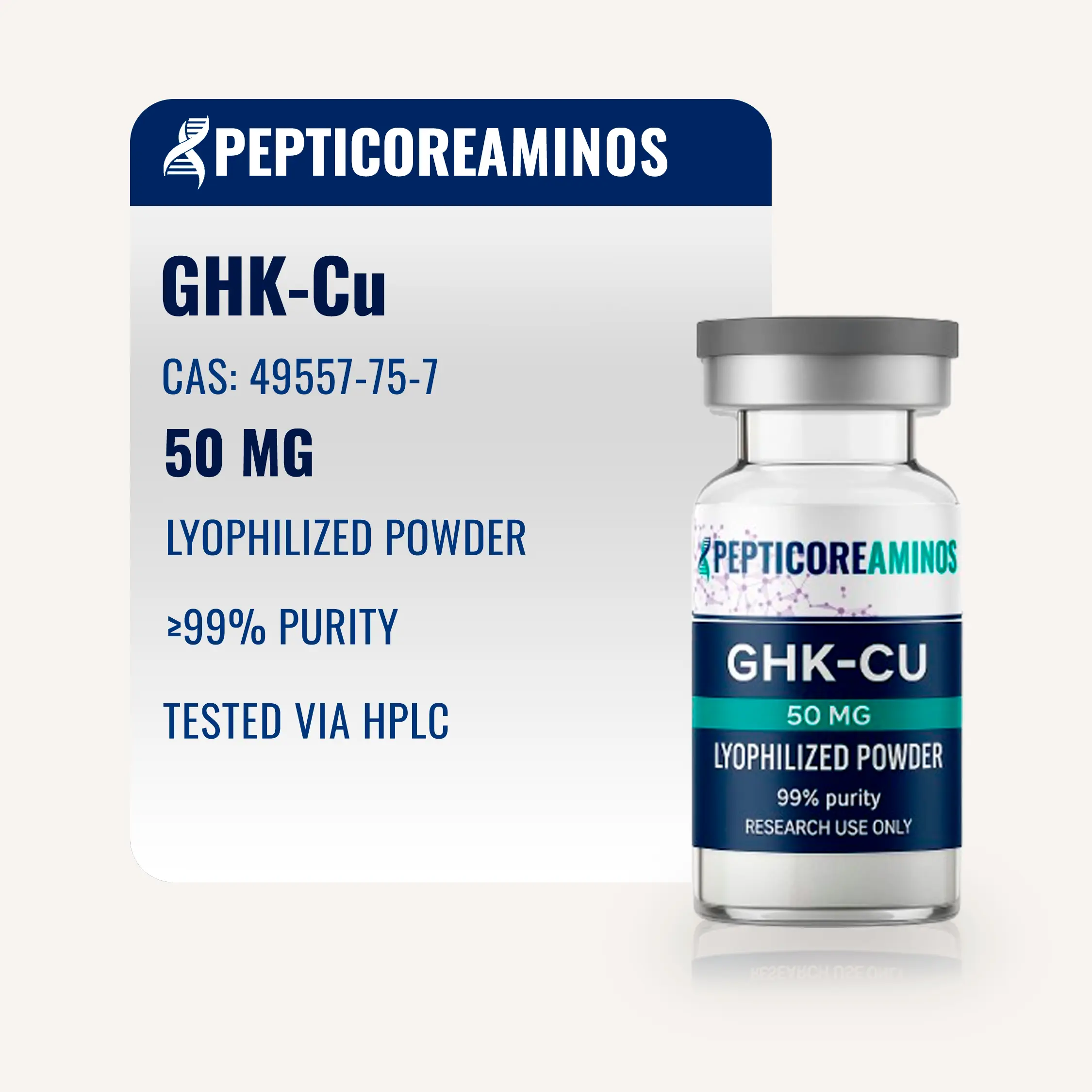


GHK-Cu (Copper Tripeptide-1)
Natural peptide for research on skin regeneration, tissue protection, antioxidant activity, and neuroprotective functions.
What is GHK-Cu (Copper Tripeptide-1)
GHK-Cu is a naturally occurring tripeptide found in human plasma, urine, and saliva. It plays a crucial role in tissue repair, antioxidant defense, and cellular regeneration. Research shows that GHK-Cu promotes wound healing, enhances collagen and protein synthesis, supports immune balance, and improves the overall health and elasticity of the skin. It also acts as a feedback signal released after tissue injury, activating the body’s natural recovery processes.
GHK-Cu and Skin Regeneration
GHK-Cu is a natural component of human blood and has been identified as a key factor in the body’s skin repair and regeneration mechanisms. Studies on skin cell cultures show that the peptide stimulates the synthesis and controlled breakdown of collagen, glycosaminoglycans, and other extracellular matrix components such as proteoglycans and chondroitin sulfate. These actions are supported by the targeted recruitment of fibroblasts, immune cells, and endothelial cells to damaged tissue, coordinating a balanced and efficient healing response.
The use of GHK-Cu in dermatological and cosmetic products is well established: it enhances skin elasticity and firmness while counteracting the visible signs of aging. Several studies confirm its ability to reduce sun damage, hyperpigmentation, and the appearance of wrinkles and scars. These regenerative effects are partly mediated by the activation of the TGF-β (Transforming Growth Factor Beta) pathway, which regulates collagen deposition and dermal tissue renewal.
In animal models, GHK-Cu accelerates wound and burn healing by up to 33%, promoting the formation of new blood vessels in damaged tissues. This discovery opens promising avenues in the study of therapies for burns and chronic wounds, where vascular regeneration is essential for full functional recovery.
GHK-Cu and Antimicrobial Effects
One of the main obstacles to proper wound healing is infection caused by pathogenic bacteria or fungi. GHK-Cu, in combination with specific fatty acids, forms an antimicrobial complex active against various microorganisms responsible for skin infections — including those frequently found in diabetic or immunocompromised patients. In clinical studies on diabetic ulcers, the administration of GHK-Cu led to a 40% increase in wound closure and a 27% reduction in infection rates compared with standard therapies.
Similar results have been observed in patients with chronic ischemic lesions, where the peptide improved re-epithelialization and reduced local inflammation. These findings confirm the potential of GHK-Cu as a multifunctional regenerative agent with both anti-inflammatory and antibacterial properties.
GHK-Cu and Cognitive Function
Emerging research suggests that GHK-Cu may counteract neuronal decline associated with aging and neurodegenerative disorders such as Alzheimer’s disease. The peptide has been shown to promote angiogenesis in the nervous system, stimulate nerve fiber growth, and reduce inflammation in brain tissue. In several studies, GHK-Cu even appeared to restore physiological gene expression in dysfunctional tissues, supporting a return to healthy cellular activity.
GHK-Cu is found in high concentrations within the human brain but tends to decrease with age. According to some researchers, this decline could be a contributing factor to the progression of neurodegeneration. In murine models of stroke and brain injury, the peptide has demonstrated an ability to prevent neuronal apoptosis through the miR-339-5p / VEGFA pathway, improving both cognitive and motor functions.
GHK-Cu and Chemotherapy Protection
In animal models treated with bleomycin — a chemotherapy drug known for its fibrotic effects — GHK-Cu has shown the ability to prevent pulmonary fibrosis by regulating TNF-α and IL-6 expression. This anti-inflammatory action could allow for the use of more effective doses of anticancer drugs while reducing systemic toxicity. The peptide has also demonstrated benefits in murine models of ARDS (Acute Respiratory Distress Syndrome), improving oxygenation and reducing structural damage to lung tissue.
GHK-Cu and Pain Modulation
In studies on rats, GHK-Cu administration reduced pain-related behaviors in a dose-dependent manner. This analgesic effect appears to be mediated by increased levels of L-lysine and L-arginine, two amino acids known for their natural calming and pain-relieving properties. These results open new perspectives in developing non-opioid, non-NSAID pain management strategies with a safer physiological profile.
Research and Safety
GHK-Cu exhibits an excellent safety profile, with minimal side effects and high subcutaneous bioavailability in laboratory models. It is currently the subject of extensive research for its potential in regenerative medicine, neuroprotection, and anti-aging therapies. All PepticoreAminos products are intended strictly for scientific and laboratory research use only (Research Use Only) and are not approved for human or veterinary administration.